
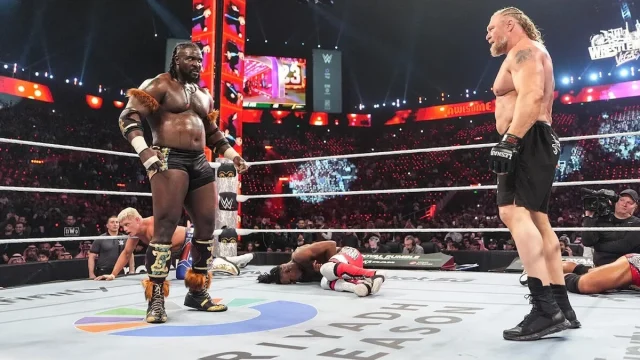
Dana White’s role as UFC president has been marked by numerous public disputes and controversies with fighters, including Brock Lesnar. This tension often stems from White’s prioritization of financial interests over fighters’ welfare, leading to friction with key athletes over contracts, promotions, and personal conduct. The Brock Lesnar UFC controversy and issues with other fighters reveal a pattern of favoritism and open disdain that has affected careers and the UFC’s public image.
Brock Lesnar’s Controversial Post-Fight Comments and Fallout
Brock Lesnar’s conflict with Dana White escalated after a post-fight interview where Lesnar, despite dominating in the octagon, criticized a major UFC sponsor, Bud Light, for not paying him directly. Lesnar stated,
“Drink a Coors Light, because Bud Light won’t pay me.”
This public attack on a key sponsor angered White, who confronted Lesnar in a tense post-fight session. Later, Lesnar recanted his statement, admitting,
“Dana came in, and we had a ‘whip the dog’ session,”
and
“I screwed up and I apologize.”
This incident revealed the intense pressure fighters face under White’s leadership and the quick pivot demanded when clashing with corporate interests.
Francis Ngannou’s Departure Amid Contract Disputes
Heavyweight champion Francis Ngannou’s relationship with Dana White soured in the early 2020s. Despite his dominant presence and aspirations toward professional boxing, Ngannou was denied key fights, including a bout with Jon Jones, and felt undervalued by the UFC’s offers. In January 2023, frustration led Ngannou to vacate his title and leave the UFC, citing disrespect and dissatisfaction with his contract terms. Since then, White has publicly criticized Ngannou, blaming him for failed negotiations and even commenting on Ngannou’s knockout by Anthony Joshua with apparent satisfaction.
Cris Cyborg’s Complex History with the UFC
Cris Cyborg faced prolonged exclusion from the UFC despite being a top featherweight champion in Strikeforce. Dana White’s early aversion was evident in disparaging remarks such as calling her “Wanderlei Silva is a dress.” When the UFC finally signed Cyborg, they created a new 145-pound division to accommodate her. However, tensions returned when Cyborg struggled to make weight and clashed with the promotion over rematch opportunities against Amanda Nunes. Following her eventual departure from the UFC, White expressed relief, stating he was “out of the Cyborg business.”
Tim Sylvia’s Declining Relationship with the UFC
Tim Sylvia’s tenure as UFC heavyweight champion began with promise but quickly deteriorated. After a steroid suspension and title stripping, he was reinstated but later lost favor due to underwhelming title defenses. White’s displeasure intensified when Sylvia requested a fight against Brock Lesnar, which was denied, leading Sylvia to seek release from the UFC in 2008. Sylvia later noted on Twitter,
“Lol @danawhite blocked me. I think all my fans was getting to him and didn’t want to here my name anymore, if he just listen 2 them.”
The falling out effectively ended Sylvia’s UFC career as he never returned after competing in other promotions.
Tyron Woodley’s Clashes with UFC Leadership
Tyron Woodley’s reign as welterweight champion was marked by four successful title defenses but overshadowed by a strained relationship with Dana White. Woodley openly criticized the UFC for perceived unfair treatment in promotion, leading White to label him the most difficult fighter he had encountered. Following underwhelming title defenses, White publicly disparaged Woodley’s drawing power and dismissed any potential fight with Georges St-Pierre. More recently, White condemned Woodley’s upcoming bout with Jake Paul as a “bunch of bullsh*t,” disputing Woodley’s claims about financial gains surpassing UFC earnings.
Randy Couture’s Blacklisting After Contract Disputes
Initially a UFC heavyweight champion and prominent figure under Dana White’s presidency, Randy Couture’s relationship with the organization soured in 2007 after failed negotiations to fight former PRIDE champion Fedor Emelianenko. Upset by the situation, Couture chose to leave the UFC, resulting in implicit blacklisting until he returned in 2008. After retiring in 2011, Couture shocked fans by leaving a UFC broadcasting role to join rival Bellator MMA, prompting White to express clear disdain, stating,
“the only time that Randy Couture is a man is when he sets foot in the cage.”
This remark underscored the fractured respect between the two parties despite Couture’s legendary status.
Demetrious Johnson’s Overlooked Legacy
Despite being widely regarded by MMA fans as the greatest UFC flyweight, Demetrious ‘Mighty Mouse’ Johnson was consistently undervalued by Dana White. Johnson’s fights often headlined less-promoted events, and his UFC pay-per-view sales were among the lowest in the 2010s, leading to frequent placement on co-main cards. After defending his flyweight title 11 times, Johnson was traded to ONE Championship in 2019 for Ben Askren, a move viewed by many as dismissive of Johnson’s achievements. White’s reluctance to elevate Johnson highlighted his focus on marketability over fighter skill and legacy.
Additional Fighters Struggling Under Dana White’s Leadership
Apart from the highlighted names, Dana White’s history involves several other fighters who faced public disdain or unequal treatment. Anderson Silva, a former middleweight legend, occasionally clashed with White over contract and promotional issues. Similarly, fighters like Jon Jones navigated complex negotiations and favoritism, often influenced by White’s preferences. These disputes have contributed to ongoing debates about UFC management and fighter rights within the sport.
Implications of Dana White’s Approach to UFC Fighter Relations
The ongoing Brock Lesnar UFC controversy and Dana White’s troubled relationships with numerous top fighters reveal deep underlying tensions within UFC management. White’s emphasis on monetary gain and promotion often comes at the expense of fighter respect and equitable treatment, leading to departures, public disputes, and damaged reputations. These conflicts raise concerns about the sustainability of UFC’s business model and its ability to retain elite talent amid increasing competition from other organizations and alternative platforms.
As UFC continues to evolve, how Dana White navigates these controversies will significantly impact the organization’s image, fighter loyalty, and fan engagement. Future negotiations, fighter signings, and promotions will likely need to balance financial interests with addressing longstanding grievances to maintain the sport’s integrity and global growth.
Lol @danawhite blocked me. I think all my fans was getting to him and didn't want to here my name anymore, if he just listen 2 them.
— Tim Sylvia (@timsylviamma) May 10, 2014

