
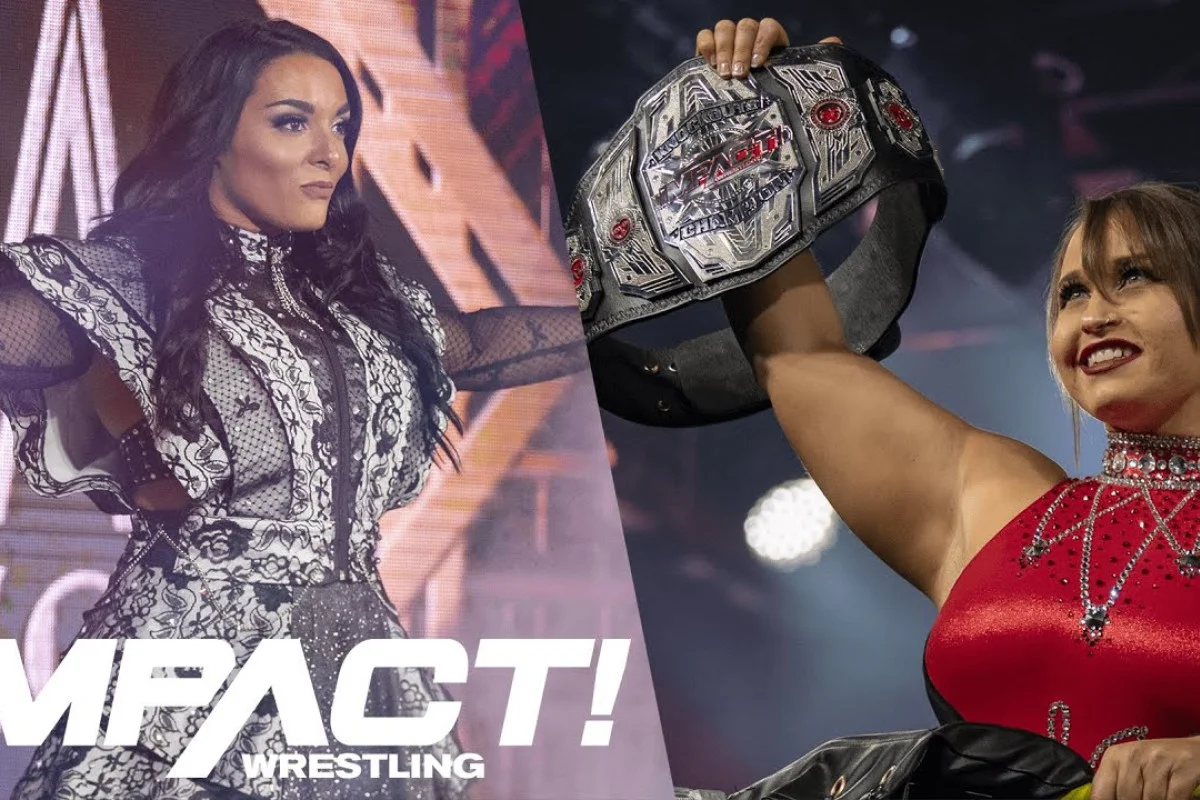
Deonna Purrazzo recently discussed how living with scoliosis has impacted her professional wrestling journey, providing rare insight into how this condition shapes the experiences of athletes in the ring. The topic emerged during a candid interview where Purrazzo shared how certain wrestling moves and practices have been noticeably influenced by her lifelong spinal condition, making the challenges of her career even more demanding.
Painful Wrestling Moves and Scoliosis
Pacing through the physical demands of the wrestling world, Purrazzo has faced unique difficulties due to her scoliosis. On The Lightweights Podcast with Joe Vulpis, she explained that basic yet high-impact moves, such as body slams and spinebusters, produce an unusual level of discomfort for her compared to others. She described these moves and the way her scoliosis intensifies the pain:
“Body slam (is a move that hurts). Number one, two and three. Um, no. Body slam’s up there for me. I just don’t like it. I think it’s the worst bump to take. Spinebuster. My neck doesn’t have the strength. My neck always slams back and it hurts. I hate it and like, a fallaway slam is coming to mind of it’s just uncomfortable. Yes (I train my neck). But not in the way wrestlers are taught to — so I have scoliosis.”
—Deonna Purrazzo, AEW star
Her remarks highlighted how her neck, already weakened by scoliosis, lacks the necessary strength to absorb traditional impacts, making certain maneuvers particularly dangerous and uncomfortable.
Managing Injuries and Training Adjustments
Purrazzo spoke openly about dealing with more than scoliosis—she also has had bulging discs since childhood, which further influence her approach to wrestling. She must be constantly cautious, adapting her routines to reduce the risk of new or worsening injuries:
“So, my neck has a slight curve to it and I just, from childhood, have bulging discs and stuff that I’ve just had to work through my whole life… So, I have to just beware of those potential injuries so, a lot of people like to do neck bridges and stuff like that.”
—Deonna Purrazzo, AEW star
The rigorous demands of wrestling mean typical neck-strengthening exercises, favored by many wrestlers, are not always suitable for her. Instead, Purrazzo relies on alternative methods such as chiropractic care and specific range of motion work, strategies she credits with preventing further issues from her scoliosis:

“That doesn’t feel good to me. Or, a couple training schools that I’ve been to want you to hang your neck over the edge of the ring and pick it up and that is very uncomfortable for me so for me, it’s more of doing a lot of chiropractic work, I do a lot of range of motion stuff with him, and that helps manage scoliosis and potential injuries way more than traditional neck strengthening things for wrestling… Knock on wood, I’m so blessed that the scoliosis hasn’t ever played an issue into my wrestling but, there’s so much room for error in wrestling as a whole so, it can be very scary.”
—Deonna Purrazzo, AEW star
Professional Achievements Amid Physical Challenges
The intensity of Deonna Purrazzo wrestling career affected by scoliosis has not kept her from reaching significant milestones in the sport. While dealing with physical obstacles, she has continued to compete, including a recent appearance in AEW in February and ongoing matches in Ring of Honor (ROH). Last month, Purrazzo made her mark by participating in the first-ever Women’s Pure Rules Match for the promotion, further demonstrating her determination and adaptability.
Purrazzo’s openness comes as other wrestlers, including former AEW star Saraya, have revealed their own struggles with scoliosis, highlighting a broader issue faced by performers in the industry. Saraya notably discovered her condition after signing with WWE, adding to the conversation around spine-related challenges in wrestling.
Continuing to Inspire and Raise Awareness
Deonna Purrazzo’s willingness to discuss her condition has drawn attention to the physical risks that wrestlers endure and the special considerations required for those with spinal issues. By speaking out, she provides inspiration and meaningful insight for fans, aspiring wrestlers, and those grappling with similar health challenges. Her story emphasizes the ever-present risks in the wrestling world as well as the resilience required to overcome them, bringing vital awareness to conditions like scoliosis in professional sports.

