
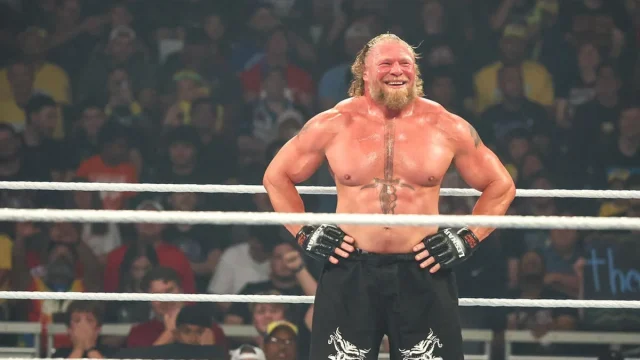
The UFC’s acquisition of Brock Lesnar in 2008 went beyond merely adding a talented heavyweight fighter; it represented a pivotal moment that significantly expanded the organization’s reach. Former UFC commentator Mike Goldberg highlighted how Lesnar’s joining the roster drew new audiences by tapping into his substantial WWE fanbase.
Lesnar, who was a standout NCAA Division 1 wrestling champion, transitioned to professional wrestling with WWE after college, quickly becoming a major star. Following his WWE tenure, he ventured into mixed martial arts, preparing diligently by training with expert partners to ease his shift into the sport. Lesnar made his UFC debut in 2008 and swiftly rose to clinch the heavyweight title the same year.
Goldberg, who narrated all of Lesnar’s UFC fights, stressed the significance of having Lesnar on the UFC roster. He noted that Lesnar’s WWE fame was instrumental in attracting a broader fanbase, propelling the UFC to new levels of popularity.
There was many reasons why [Lesnar] was brought in, but [his WWE popularity] was one of the major reasons that the UFC went and signed Brock Lesnar, was to broaden the audience,
Goldberg told The Game Plan.
It was a big turning point, it was a huge moment for the [UFC]. And I do remember that Brock Lesnar is the largest human being in great shape that I ever met in my life.
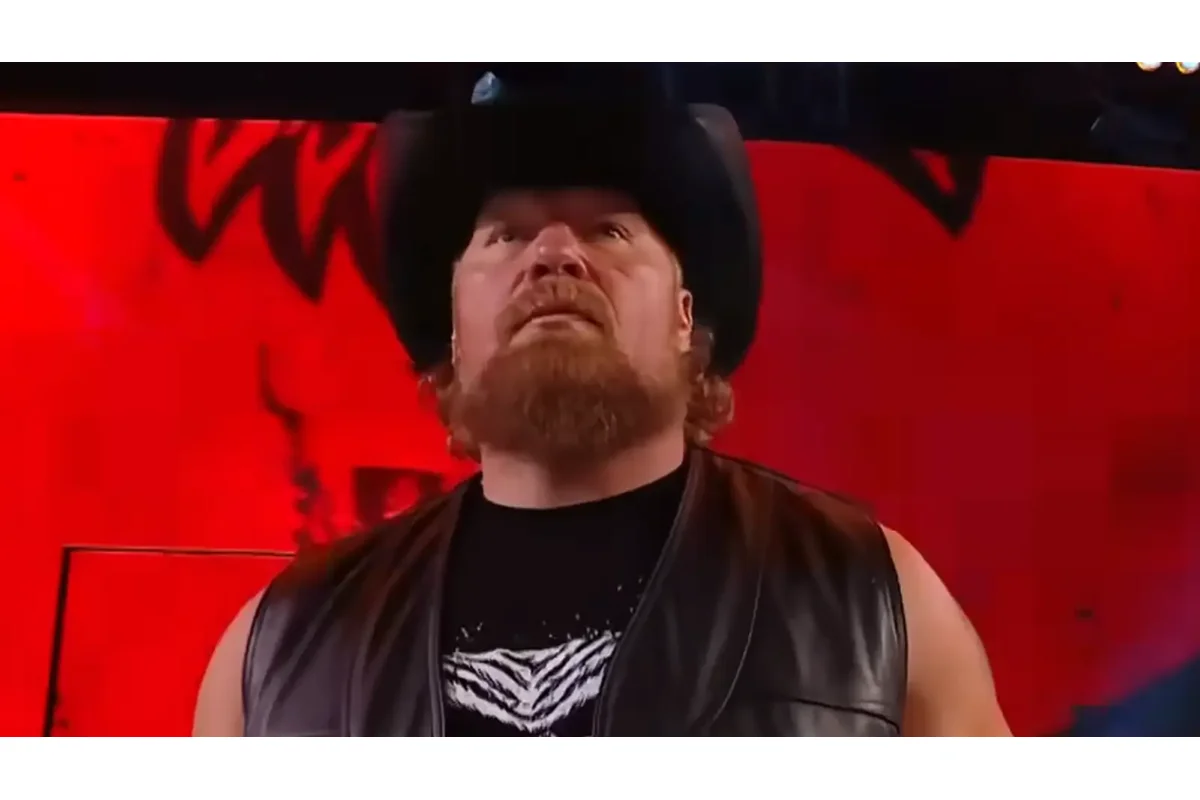
Lesnar quickly became a dependable draw for pay-per-view events, with his fights commonly generating around one million purchases.
Goldberg Recalls Lesnar’s First Octagon Challenge Against Frank Mir
Brock Lesnar’s initial UFC fight was a daunting test, as he squared off against former heavyweight champion Frank Mir at UFC 81. Despite Lesnar’s limited MMA experience, Mir secured victory by submission in the first round. However, this bout marked a significant milestone, showcasing Lesnar’s credible wrestling background.
Goldberg recalled that several WWE stars were in attendance, lending their support. He emphasized that fans quickly appreciated Lesnar’s real wrestling credentials, which underscored his authenticity in the octagon despite the loss.
I remember there were the superstars of WWE and the wrestling world, all in attendance that night that Brock fought in the octagon for the first time,
Goldberg said.
People forget, Brock Lesnar was 106-5 as a collegiate heavyweight wrestler at the University of Minnesota. So, he was legit.
Goldberg also emphasized that signing Lesnar was a strategic step that broadened the UFC’s appeal, drawing not only wrestling fans but also visibility from other prominent wrestling figures.
I remember what a major move that was for the UFC. How that did broaden the perspective not only for the wrestling fans and not only just Brock in the octagon, but then you’re seeing The Undertaker and ‘Stone Cold’ Steve Austin.
Lesnar’s Perspective on UFC and WWE Business Approaches
Brock Lesnar once reflected on the similarities between UFC’s and WWE’s business models, pointing out that despite one being a legitimate sport and the other scripted entertainment, both entities fundamentally market fights to their audiences. Speaking with ESPN in 2015, Lesnar highlighted how the central difference lies in the authenticity of competition.
He acknowledged, however, that Vince McMahon, WWE’s promoter, excelled in entertainment promotion more than UFC’s Dana White, who had previously dismissed pro wrestling as fake.
[White] is trying to sell pay-per-views. He’s trying to sell money fights. It’s the same [as WWE]. [UFC] is non-rehearsed, absolutely,
Lesnar said.
The business model is the same. It’s identical, and I think Vince McMahon is better at it than Dana, and that might rub Dana the wrong way.
The Enduring Legacy of Brock Lesnar’s UFC Tenure
Brock Lesnar’s move into the UFC catalyzed a significant evolution in how the promotion attracted and expanded its fanbase. His crossover appeal from wrestling to MMA helped elevate UFC’s visibility to a mainstream audience previously untapped. As a pay-per-view magnet, Lesnar’s matches not only delivered financial success but also established a blueprint for recruiting high-profile athletes from other sectors.
The UFC’s ability to leverage Lesnar’s unique background remains a defining moment in its growth, with lasting effects on the sport’s popularity and business strategies. Moving forward, his legacy continues to influence how the UFC integrates athletes with diverse athletic histories to broaden their market impact.

