

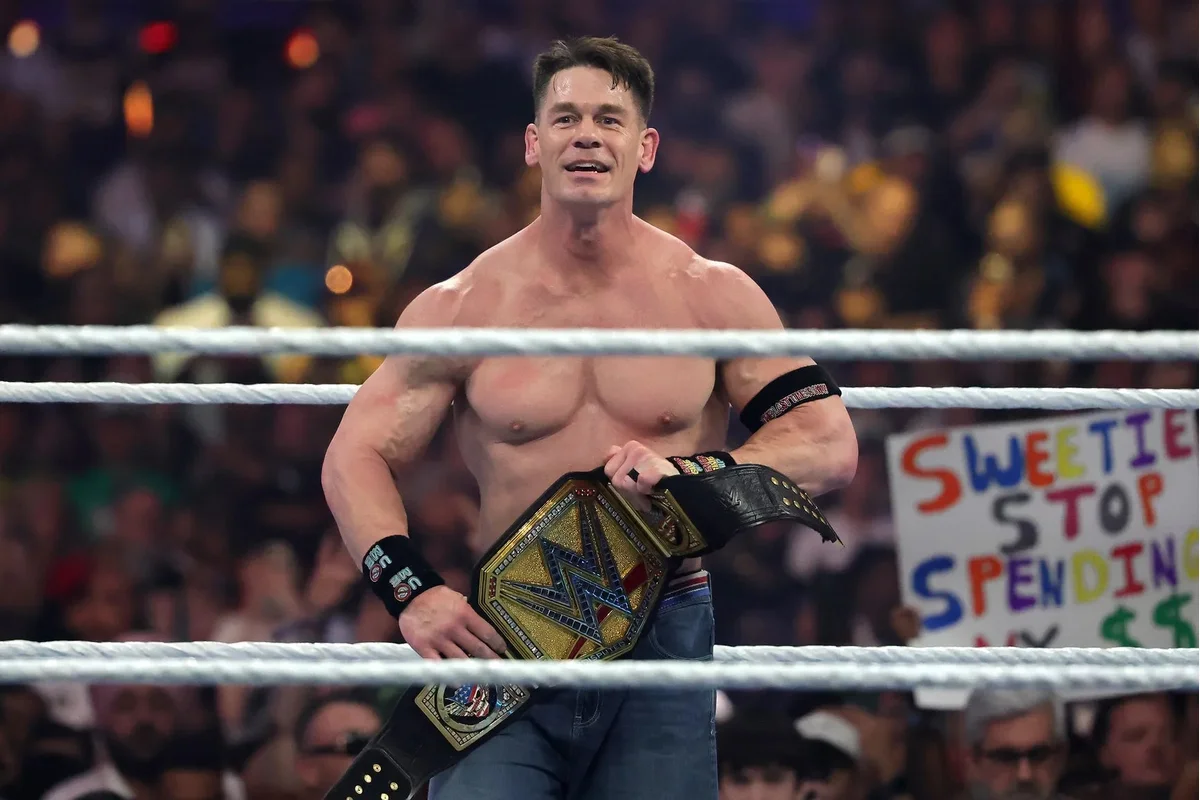
Former WWE Champion John Cena held his retirement match against Gunther at Saturday Night’s Main Event in Washington, D.C., during mid-December last year. Cena, a 17-time World Champion, recently explained in detail why he decided on December for his final bout, emphasizing strategic considerations for WWE’s business calendar.
The Controversy Over Cena’s Retirement Timing
When WWE announced Cena’s farewell event, many fans questioned the timing, feeling it did not suit his legendary status. There was widespread opinion that Cena should have ended his in-ring career at WrestleMania 42, WWE’s marquee annual show, traditionally reserved for significant farewells. However, Cena had different ideas about the optimal timing for his retirement.
Choosing December: A Strategic Business Move
During a recent appearance on the No-Contest Wrestling Podcast, Cena laid out his reasoning for selecting December. He pointed out that, within WWE’s calendar, December is a quiet month following Survivor Series and before the Royal Rumble, often considered a “month in limbo.” He noted,
“There is a lot of stuff going on in December, and in the WWE calendar, Survivor Series is the last one, and then everyone waits for the Rumble. December is like a month in limbo. They’ve never really been able to crack that code. And with people on holidays, there’s until the holiday season is over, until the 26th, tickets are tough to sell because people are spending on holiday presents. So, it’s a weak month for viewership; it’s a weak month for live attendance. And the fans are like, ‘Wait till January!’ When I presented this idea to Nick Khan and Triple H, they were awesome. ‘Who do you want to work with? What event do you want to retire?’”
— John Cena, Former WWE Champion
Negotiating with WWE Leadership
Cena discussed how he presented his plan to WWE President Nick Khan and executive Triple H, prioritizing the company’s business interests over personal acclaim. He explained,
“I simply said, ‘Hunter, who I want to work with is up to you; that’s your department. I’ve never been that guy. I don’t want to take this last year and change who I am. You deal with my plan.’ ‘Nick, from a business perspective, the data that I’ve gathered over 23 years of doing business is that December’s soft. WrestleMania is gonna sell itself. So retiring at WrestleMania is selfish. It doesn’t do anything for the business. We retire in December, our weakest month, and take the middle of the month, the dry zone, that desert from the end of Survivor Series to the beginning of the Rumble. We put it like in the middle of December because I know once you do the Holiday Tour, the house will come back, and you guys will make money. Let’s show a profit in Q4. And you put whatever arena you want; it doesn’t matter, no affiliation to geography. Just let’s get ourselves in the best position to have the best December that we can because this, I feel, is an event that people will pay to see,’”
— John Cena, Former WWE Champion
Cena’s Farewell Match and Its Impact
John Cena’s retirement bout against Gunther concluded in an unexpected and emotional manner, as Cena tapped out, stunning fans both at the arena and worldwide. This decisive outcome added a layer of gravity and finality to his departure, deepening the impact of his exit from active wrestling. Cena’s decision to retire in December also represents a shift in how WWE might approach retirements and high-profile events during traditionally slower months on their calendar.
The Significance of Cena’s Retirement Timing for WWE
By choosing December, Cena aimed to help WWE strengthen a period that is usually weak for ticket sales and TV ratings, turning a challenging period into an opportunity. His approach suggests a business-first mindset rarely seen in retirement choices among top athletes. This decision could encourage WWE to reexamine how it schedules major events, potentially balancing fan expectations with strategic financial planning. Cena’s departure during this period may also set a precedent for future end-of-career matches within the organization.

