
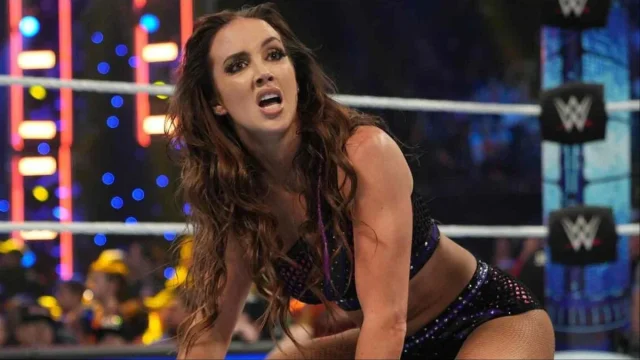
WWE Senior Producer Michael Hayes addressed his recent statements regarding Chelsea Green’s position within the company during an episode of The Undertaker’s Six Feet Under Podcast. Hayes elaborated on Green’s current responsibilities as the first-ever Women’s United States Champion, emphasizing her role in elevating rising stars like Tiffany Stratton rather than pushing for her own top-tier status.
The remarks sparked widespread discussion on social media, including Chelsea Green expressing frustration about limitations placed on her progress during media interviews. When The Undertaker mentioned Hayes’ earlier comments on the podcast, Hayes clarified that his full praise for Green’s talent was edited out of the final Netflix episode of WWE: Unreal Season Two, which had contributed to misunderstanding.
Despite the edits, Hayes maintained that Green’s primary mission is to help develop other wrestlers. While acknowledging her large fan base, he stated that she has not yet reached the level warranting a significant company push akin to those given to Daniel Bryan and Kofi Kingston. Hayes also suggested that if WWE creative were to suddenly emphasize Green, some fans might react negatively, although he agreed with The Undertaker’s point that Chelsea is underused and has the potential to be a leading performer.
Clarifying the Full Context of His Comments on Chelsea Green
“I’ve talked to Netflix about this because when we did that interview, and I recalled this specifically, when we started that interview, the first thing I said was, ‘Chelsea is as good or as talented and entertaining as anyone we have.’ Of course, that never saw the light of day. That was the cutting room floor because if you’re going to make me a heel, the best way to do it is to say she’s not good enough. That’s not really what I was saying. I don’t regret what I said because her role, at the time I said that, and even right now, is not the top role. It is to help make other people. As we all know, we’re only as good as the people who help make us.”
— Michael Hayes, WWE Senior Producer
Reasons Behind His View That Now Isn’t Chelsea Green’s Moment for a Big Push
“With that said, if Chelsea caught fire because of the following and support she has, we’d go with that in a heartbeat. Look at Daniel Bryan; look at Kofi Kingston. When they both caught fire, we went with it. Whether some people at the top agreed with it or not, they went with it because that’s what the people wanted. We’re not there right now with Chelsea, and quite frankly, I feel, just my opinion, the people that support Chelsea now, if we start pushing her, would fade because she’s getting pushed from the machine. If she’s getting a push from the machine, that doesn’t help.”
— Michael Hayes, WWE Senior Producer
Insight Into Chelsea Green’s Awareness of Her Current Role
“Intricately, I feel that the fans love it when they know that their support makes a difference and can change a career. Take a look at NXT, especially in the Full Sail days. Those people knew their support had power because it could change or make the start of someone’s career. It’s still that way, to an extent, at the Performance Center. You see, people get behind people that the office isn’t getting behind because they feel they can make a difference and make a change. Chelsea is amazingly talented and amazingly entertaining. She can handle anything, but that’s the role she’s in right now. Not necessarily her fault. To her credit, she knows her role, she does it, and she plays it with a smile.”
— Michael Hayes, WWE Senior Producer
Hayes’ Commitment to Speaking His Perspective Candidly
“I spoke what I felt to be the truth. All the truth is not out there; that’s okay. People have hated me since the beginning of time, and if you ask me a question, I’m going to try to tell you the truth. I still fear that if get behind her, it hurts the rebel support.”
— Michael Hayes, WWE Senior Producer
Michael Hayes’ clarification highlights the nuanced challenges faced by Chelsea Green within WWE’s current creative direction. Although recognized for her talent and entertainment value, the company appears to be positioning her more as a developmental presence who aids the advancement of newer stars like Tiffany Stratton. Hayes’ remarks reflect concern about potential backlash if WWE decides to accelerate Green’s push without organic fan momentum.
This discussion also underscores the delicate balance WWE attempts to maintain between corporate creative decisions and fan-driven popularity. Hayes pointed to Daniel Bryan and Kofi Kingston as examples where overwhelming fan support forced WWE’s hand to elevate them, indicating that Chelsea Green’s journey might depend heavily on similar spontaneous fan enthusiasm. Additionally, Hayes acknowledged Green’s professionalism and acceptance of her role, which could serve as a foundation for future opportunities.
Going forward, Chelsea Green’s trajectory within WWE will likely hinge on her ability to generate stronger fan reactions and showcase the qualities Hayes described as her “IT factor.” As WWE continues to develop its women’s division, monitoring how Green’s role evolves amidst these internal and external pressures will be key to understanding her standing in the company’s competitive landscape.

