
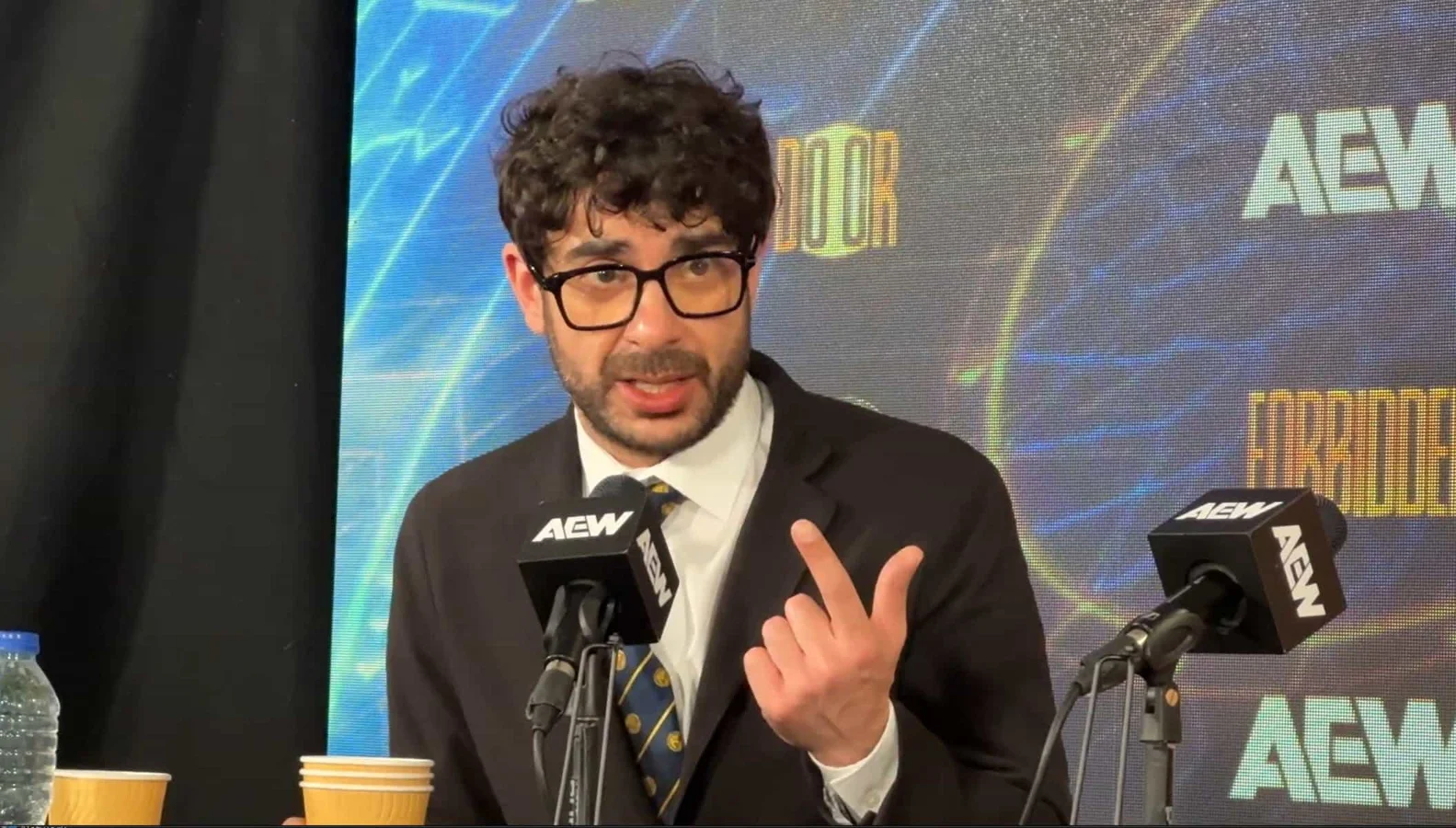
Former professional wrestler Jake Hager has openly criticized Tony Khan’s management and booking approach in All Elite Wrestling (AEW) since his departure from the promotion. Highlighting frustrations that stem from changes in AEW’s direction following key personnel shifts, Hager questioned Khan’s ability to effectively run the company and handle creative responsibilities. His comments reflect ongoing concerns about Tony Khan AEW criticism and its impact on the organization’s future.
Impact of Cody Rhodes’ Exit on AEW’s Creative Environment
Hager pointed out that AEW’s atmosphere and operational flow significantly shifted after Cody Rhodes left the company. Speaking to Bill Apter, Chris Featherstone, and Dutch Mantell, he explained that Rhodes’ involvement had ensured a certain level of organization and direction. After his departure, the leadership structure appeared to fragment, with individuals like the Young Bucks, Kenny Omega, and Chris Jericho holding sway over their own storylines. Hager noted delays in communication and planning, citing that Tony Khan often failed to respond promptly to key individuals.
He shared,
“I think everything changed after he left because he was involved with it, and after that, it just kind of became a free-for-all. Young Bucks and Kenny still had a big say in what they were doing. Chris (Jericho), obviously, has a big say in what he’s doing. Even Chris, he would tell me that Tony would not respond to his messages for two weeks. It became a point where, either AEW is important or it’s not. It just seemed like it was not to him. They stopped doing production meetings. They stopped doing anything to make the show timely. We would be waiting around to 5 PM to find out what we were doing that day. What live television show does that? Only one with money behind it,”
—Jake Hager
Questions Around Tony Khan’s Experience and Booking Authority
On the Chris Van Vliet Insight podcast, Hager intensified his critique of Khan’s leadership, emphasizing Khan’s lack of experience in professional wrestling booking. He claimed that Khan struggled with creating enduring storylines and instead relied on flashy debuts and expensive production elements. Hager accused Khan of surrounding himself with unquestioning allies, which stifled constructive feedback and led to poor decision-making.
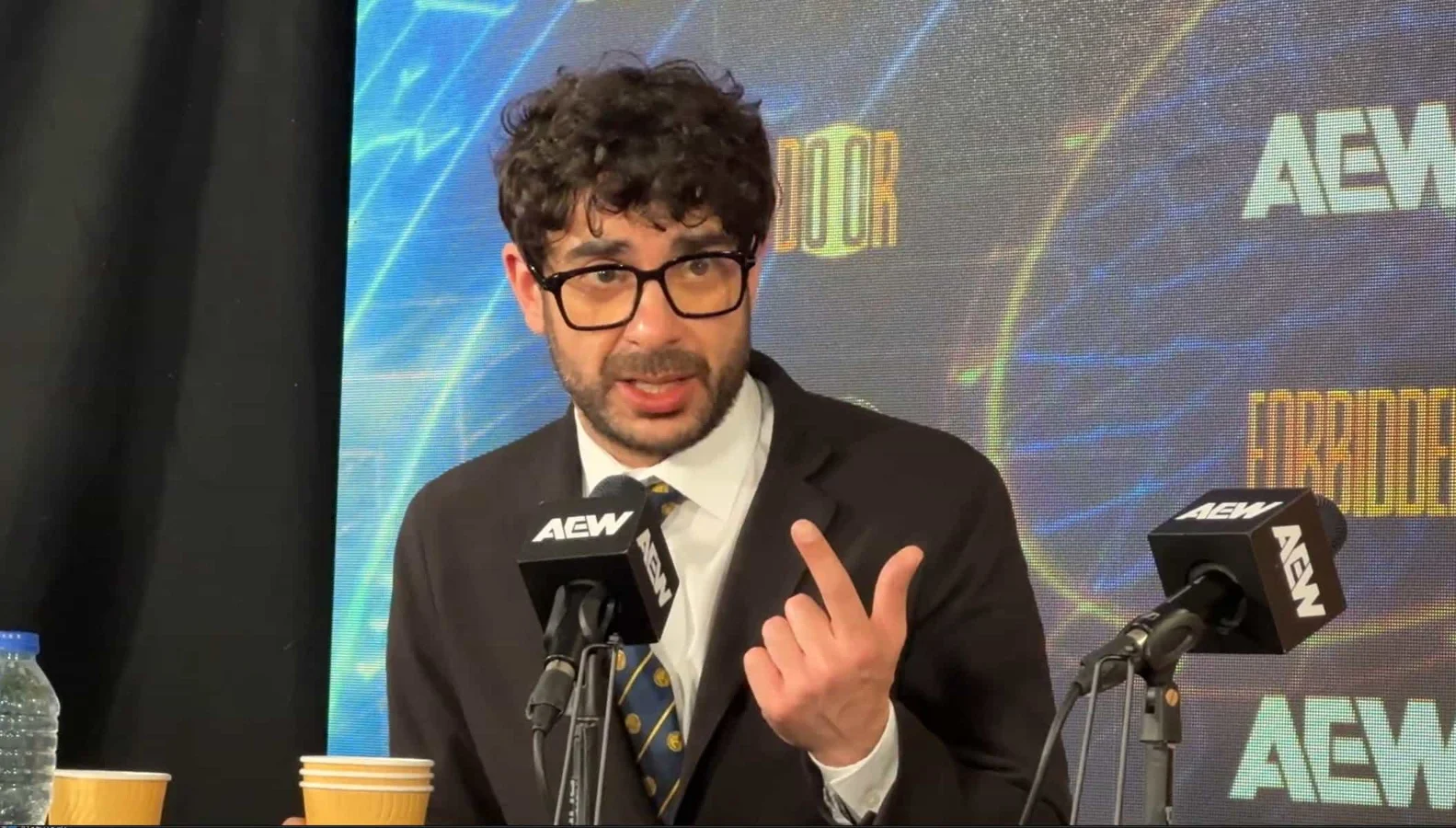
Hager expressed,
“Tony Khan, who has been in this business for a cup of coffee can’t make himself a sandwich let alone write a storyline that will last. He can spend a lot of money and make a big debut and make a lot of firework but in the end run he is in charge and we’re supposed to trust him to make storylines that make our careers that we’re investing in his company,”
—Jake Hager
Resistance to Criticism and the Resulting Frustrations
According to Hager, Tony Khan’s inability to accept criticism contributed to worsening conditions backstage. Wrestlers were reportedly forced into passive roles with limited input, while Khan made decisions without collaboration or acknowledgment of mistakes. Hager described the experience as frustrating, considering the effort and dedication wrestlers put into growing AEW.
He detailed,
“We became his little playthings. We had to wait outside his office….It got to the point where you couldn’t tell him anything. He couldn’t take criticism. He was f—–g up and we were all just having to deal with it, you know? We all had blood, sweat and tears put into that company. We were all there at the beginning. We all had our careers behind us that helped build that company and then we all had to just sit side-by-side and couldn’t do anything because he wanted to run it the way he wanted to run it,”
—Jake Hager
Why Tony Khan Avoids Delegating Booking Responsibilities
When asked about Tony Khan‘s reluctance to delegate booking responsibilities, Hager offered a pointed explanation. He suggested that Khan views AEW as his personal project and does not want others involved in decision-making. This attitude, according to Hager, leads to disorganization and a lack of clear leadership within the company.
He said,
“You know why? Because this is his toy box and nobody else can play with his toys but him. It’s so mind-blowing. Tony himself will always talk about, ‘I have so many businesses. I have a soccer club in England. I have this other business.’ Either AEW is important or it’s not. Put some f—–g attention on it. Don’t make us wait until 5 PM to know what we’re doing that day. You have no idea what you’re doing and you can’t admit that you’re making mistakes. Admit that you’re making mistakes and then people can work with you. Other than that, if you want to act like you’re holier than thou and you know everything is perfect in pro wrestling, okay, good luck.”
—Jake Hager
Discontent Over Contract Offers and the Final Break
Hager also expressed dissatisfaction with the final contract offer he received from AEW. Despite his contributions, including participation in high-profile events such as Stadium Stampede and the debut Dynamite episode, he felt undervalued by the terms presented. This, combined with his grievances over management style, led to his decision to leave the company.
He stated,
“I always find a way to say this every day so I think everyone should, too. Say: ‘F–k Tony Khan.’ I could tell he didn’t want me there. He offered me a year and a half. I was, like, ‘Bro, I just did Stadium Stampede twice. Don’t act like Stadium Stampede didn’t put AEW on the map. I was in the debut Dynamite episode. I was the big spoiler and you offer me 18 months, after all that?’ So, it was that and the way that he started running the business. He wasn’t a professional,”
—Jake Hager
Implications for AEW’s Future Direction and Leadership
Jake Hager’s strong criticisms highlight ongoing tensions within AEW’s leadership and booking processes, raising questions about Tony Khan’s ability to maintain consistency and creative quality in the promotion. These issues could affect wrestler morale and the company’s public perception if not addressed. AEW fans and insiders will likely watch closely to see whether Khan adjusts his management style or brings in new voices to guide the company’s creative direction moving forward.

