
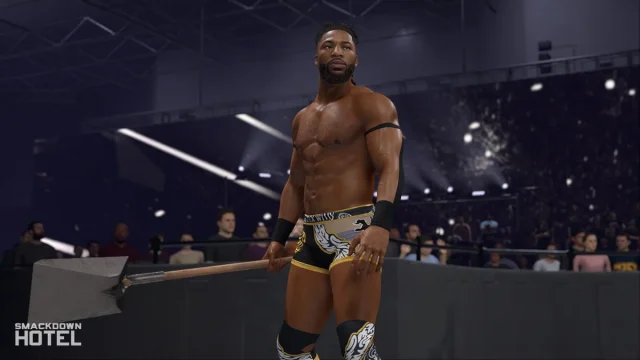
Trick Williams‘ stint as TNA World Champion has reignited debates about the impact of cross-promotional title reigns between WWE and TNA, highlighting questions about whether such runs enhance both brands or weaken the home roster. His 140-day tenure with the championship, intersecting both TNA and WWE’s NXT, took place amid a backdrop of tension and divided opinions, particularly among those who believed Joe Hendry’s own title run was prematurely ended.
Williams’ Perspective on Claiming the Title
Rather than portraying Joe Hendry as a victim of bad timing, Williams framed the situation as an opportunity he actively chose to seize. Reflecting on the moment at Rebellion, Williams said,
I saw an opportunity, a direct line at the ‘Average Joe’ holding the belt,
making clear that in his view Hendry did not capitalize on the championship’s potential.
I said, ‘He don’t know what to do with that thing.’ Let me go and take that up off you.
This mindset clarifies that Williams saw himself less as an intruder and more as a competitor acting on instinct and momentum in a competitive environment. He explained,
I seized the opportunity and made it about myself,
emphasizing that the title win was a natural progression tied to his own ascent rather than a hostile takeover.
Locker Room Reaction and Public Perception
Williams’ reign immediately caused friction backstage. Despite appearing on both TNA and NXT, he sensed the disapproval the moment he arrived.
“Oh yeah, they hated me, man. Every second,”
Williams admitted, acknowledging the resentment that came with his position.
Rather than shy away from the negativity, Williams openly embraced it as part of the act. He noted,
A good, young-looking, dark brother like myself coming in their brand and taking their title, cutting diss tracks on them… there wasn’t nothing to like about me,
continuing,
But sometimes that’s what’s best for business.
His unapologetic attitude confirmed that he saw the heat as a sign the storyline was engaging fans and stirring real emotion within the locker room.
Support Within the Ranks and the Role of AJ Francis
Though much of the backstage atmosphere was chilly, Williams acknowledged that he received support from a few individuals, notably AJ Francis. While the majority of interactions remained tense, Williams didn’t clarify whether the hostility reflected true personal animosity or was part of the layered narrative crafted by WWE and TNA’s ongoing collaboration.
Joe Hendry’s Ongoing Popularity and the Wrestling Narrative
At the heart of this narrative stands Joe Hendry, whose fan base remained loyal even after losing the championship. Williams’ comments did not dispute Hendry’s rapport with the audience but challenged the notion that fan momentum alone guarantees a sustained title reign. For Williams, possessing a championship meant exerting control and seizing the moment, rather than passively awaiting fan approval or external validation.
The Broader Implications for Cross-Promotional Wrestling
The experience of Trick Williams’ TNA title run highlights the complex dynamics that arise when championships cross organizational boundaries. Such scenarios prompt fans and insiders to reconsider ideas about legitimacy, loyalty, and the meaning of success in modern wrestling. Williams’ confident stance exemplifies a changing environment where brand distinctions blur and personal ambition plays a critical role in shaping storylines.
Whether audiences view Williams as a necessary force shaking up the status quo or an outsider who disrupted Hendry’s path depends largely on their attitude toward collaboration between wrestling promotions. What remains clear is that this title run was intentionally designed to provoke strong reactions, ensuring that discussion around it persists well beyond the moment the championship changed hands.

