
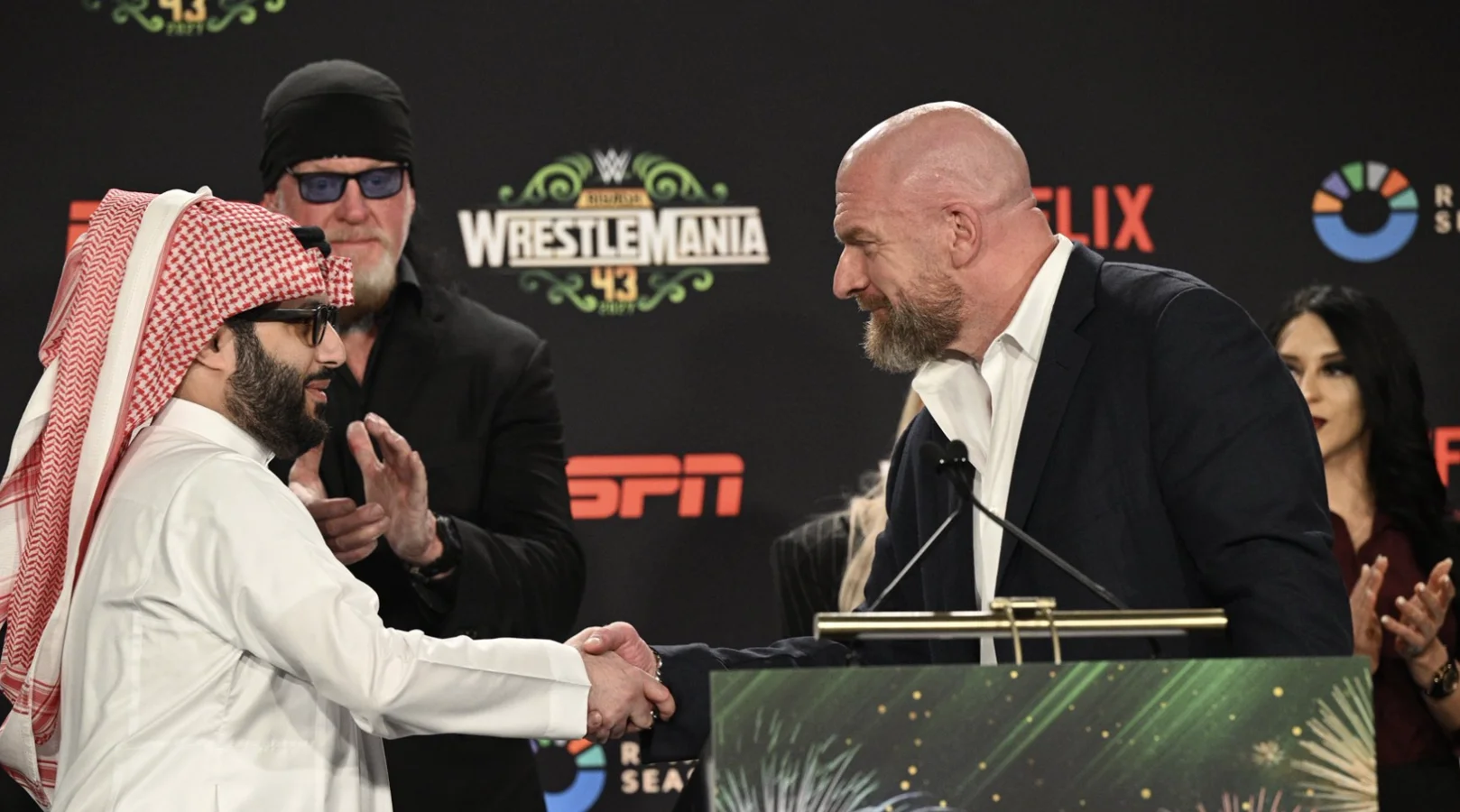
JBL, a former World Champion, has openly defended WWE’s decision to host WrestleMania 43 in Saudi Arabia, pushing back against the criticism the move has generated. Announced on September 12, this will be the first time WWE’s marquee event is held outside North America, signaling a major shift in the company’s global strategy. While this decision has excited many, it has also sparked significant controversy due to Saudi Arabia’s troubling human rights record and related political concerns, including the assassination of journalist Jamal Khashoggi.
JBL addressed the backlash on the podcast Something to Wrestle With, labelling the dissent as misplaced and emphasizing that WWE isn’t positioned to act as a global moral authority. He noted the complexity involved in judging the motives behind the criticism and warned against blanket condemnations of business dealings based on country-specific issues, pointing out that no nation, including the United States, is without faults.
Defending WWE’s Role in Cultural Change Through Entertainment
In his comments, JBL emphasized the positive impact WWE’s presence has had in Saudi Arabia, highlighting moments when fans reportedly chanted “This is change” during events featuring women wrestlers—an unprecedented sight in the Middle East. He portrayed WWE as more than an entertainment company, suggesting their programming can act as a window to the world and a catalyst for gradual progress in societies often perceived as closed off.

“When you had women over there for one of the first times in the Middle East countries, the fans, at one point, chanted, ‘This is change.’ And I think that’s important. I think it’s important to work with these countries… When you isolate these countries and don’t deal with them at all, it has shown historically that nothing changes, and all you do is impoverish an entire nation…When you send something like WWE over to Saudi Arabia. I don’t want to overstate what an entertainment company is. I think that’s something that opens up the world. And you see that when you see these kids’ eyes, you see that when you hear the fans chanting, this has changed. You see that when you see women wrestling…Are there a lot of things wrong? Yeah, 100% there are a lot of things wrong. A lot of things are wrong with our country, too. If you’re looking at our country from the outside in, if you’re the moral police, you might want to, not want to do business with us either. I think there’s reasons to do things, and I think what WWE is doing is good.”
His argument challenges the prevalent view that excluding Saudi Arabia from international events is the best course of action. JBL believes engagement, not isolation, fosters change and increased understanding. He compared the criticisms aimed at Saudi Arabia to similar flaws within the United States, reinforcing his stance that no country is beyond reproach.
Star Power and High Stakes: WrestleMania 43’s Roster Developments
The announcement of WrestleMania’s Saudi Arabia move has also included rumors about the return of some wrestling icons, adding heat to the event’s drawing power. Stone Cold Steve Austin is confirmed to appear, while discussions regarding the involvement of The Rock reportedly continue positively. Sources allege that The Rock could headline the event, achieving what would be the largest individual salary ever paid to a single wrestling talent for one show, underscoring the company’s commitment to making this groundbreaking location memorable.
Controversy Surrounding Saudi Arabia Hosting WWE’s Biggest Event
The backlash against WWE’s Saudi Arabia deal stems from several factors. Critics cite the kingdom’s history of human rights abuses, harsh treatment of the LGBTQ community, and the ongoing dialogue about whether sporting events are being used to polish Saudi Arabia’s global image, often referred to as “sportswashing.” The assassination of Jamal Khashoggi remains a significant and sensitive political issue tied to the country’s reputation, further intensifying opposition to WWE’s partnership.
Despite these concerns, WWE’s leadership, including figures like Triple H, have repeatedly pointed to the progress they believe the company has helped inspire in the kingdom since their initial events there began in 2018. JBL’s statements fall in line with this narrative, focusing on long-term cultural impact rather than short-term controversies.
Broader Wrestling World Developments Reflect Industry Shifts
As WWE navigates this contentious chapter, the wider wrestling landscape continues to evolve with notable roster movements and storylines. Tony Khan’s AEW recently welcomed two former WWE champions, signaling ongoing competition between wrestling promotions to secure elite talent.
Jim Ross expressed enthusiasm about Bryan Danielson’s emerging role in AEW, recognizing the Hall of Famer’s influence and anticipating a strong performance as Danielson carries forward the legacy.
Meanwhile, inside WWE, wrestlers like John Cena have shared personal insights, including his reasons for not wanting children, reflecting more candid, human moments away from the ring.
In storyline news, Seth Rollins remains a powerful heel, recently involved in an altercation with AJ Lee, while another WWE star, aged 34, has publicly vowed to capture a title on SmackDown ahead of Wrestlepalooza.
Ongoing Debates Among Wrestling Figures Heighten Storylines and Opinions
Some controversies continue to ignite discussions within the wrestling community. Rob Van Dam, for instance, refuses to apologize for statements he made related to an incident involving Raja Jackson inside a wrestling ring. Such stances often spark debate over conduct and accountability in the sport.
Additionally, comparisons between WWE eras have drawn attention, with fans and talent contrasting Vince McMahon’s leadership style to that of its successor, TKO. These differences highlight changing dynamics within the company and how those changes affect both performers and audiences.
The Undertaker has also stirred controversy by questioning the importance of wrestling moves, challenging traditional wrestling norms and prompting reactions across the industry.
What This Means for Wrestling’s Future and WWE’s Global Strategy
The decision to hold WrestleMania 43 in Saudi Arabia represents a bold, if contentious, new frontier for WWE. JBL’s defense underscores the company’s belief that engagement with complex countries can serve as a vehicle for progress, despite the vocal opposition centered on ethical concerns. This move marks a historic moment for WWE’s expansion beyond North America and reflects deeper tensions between business ambitions, fan reactions, and geopolitical realities.
As major stars prepare to appear and debates continue both inside and outside the ring, the WrestleMania Saudi Arabia move will likely shape the wrestling world’s conversations for months to come. It highlights wrestling’s unique position as a global entertainment platform caught at the crossroads of sport, culture, and politics, with far-reaching implications for performers, fans, and the industry’s future.

