
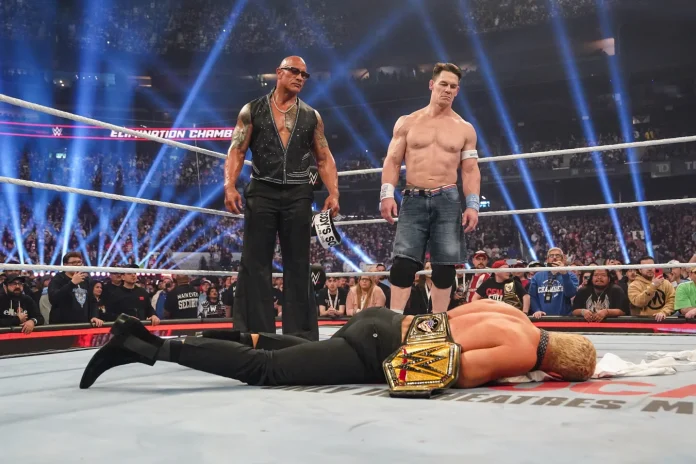
The ongoing saga between CM Punk and John Cena takes on renewed relevance after Punk’s return to WWE, challenging long-held perceptions in the John Cena CM Punk WWE feud. This development invites a closer look at how their legendary rivalry and its fallout have shaped fan perceptions, especially regarding principles and loyalty in professional wrestling.
The Roots and Ramifications of the Punk vs. Cena Feud
Debates continue among wrestling enthusiasts about which figure truly embodied authenticity during the height of the Punk vs. Cena conflict. Fans often struggled to determine who deserved their support: the brash critic railing against wrestling’s establishment, or the seemingly principled “voice of the voiceless” whose convictions might have been more situational than steadfast.
Reflecting on earlier perspectives, it becomes clear that, over time, shifts in both men’s careers have complicated their narratives. For latecomers or those needing a refresher, CM Punk made headlines by apologizing for a controversial social media remark, an event that added further complexity to discussions surrounding his ethos.
Punk’s Persona: The Reality Behind the Rebel Image
Historically, CM Punk’s character—driven by defiance of authority and advocacy for those overlooked—created a powerful link with wrestling fans. Phillip Brooks, the man behind Punk, crafted an identity seen as genuinely anti-establishment, allowing for a deep bond with audiences. This authenticity kept Punk’s name echoing in arenas, leading AEW to embrace his return years after his supposed finale.
Punk’s willingness to take unpopular stances became part of his legend, such as when he publicly condemned human rights issues in countries with whom WWE was associated. His remarks about WWE’s dealings in Saudi Arabia particularly resonated with those critical of corporate priorities and sportswashing of controversial regimes.
WWE has often tried to justify its international presence with optimistic narratives about sparking positive change, coming across to critics as both naive and self-important given the complex traditions and realities of places like Saudi Arabia. For employees—especially outspoken ones like Punk—the lines between personal values and professional obligations tend to blur, referencing the very dilemma John Cena highlighted regarding Punk’s consistency.
The Transformation of CM Punk and Echoes of Cena’s Criticisms
The CM Punk that fans see today is far removed from the anti-corporate rebel who walked out years ago. Rejoining WWE, despite its business ties and practices, signaled a major shift for a man who once pledged to stand apart from corporate expectations. While Punk’s reputation for calling out powerful figures and questionable ethics remains, there is now an asterisk beside his actions, given the compromises entailed by his return.
Factors like growing older, accumulating career scars, or simply recalibrating priorities may have influenced Punk’s changed approach—perhaps now seeing value in securing his legacy with WWE and ending his career on his own terms. Financial considerations are harder to ignore as Punk, by his own admission, has become a wealthy figure, facing pressures and responsibilities that come with such status, much as John Cena argued.
Punk famously lambasted Cena for appearing to prioritize profit and corporate advancement. Yet, in recent years, Punk’s own endeavors—including media appearances and embracing WWE publicity opportunities—have painted him with similarly corporate hues.
Punk’s Reversal and Its Implications for His Legacy
What compounds the irony for critics and fans is CM Punk’s willingness to participate in WWE’s Saudi Arabia events, an idea he previously criticized on moral and ethical grounds. This pivot stands in stark contrast to statements he made in the past, with clips surfacing of his strong condemnations regarding doing shows in that region:
“How many Saudi Arabia shows do they have to do to bring back CM Punk?”
“I don’t know… I’m not doing a single one of those. . . it sounds so shady.”
“Yeah, right!” —Big Kat, Punk, PFT
Despite his earlier assertions, Punk’s return to WWE—including participating in shows previously described as problematic—raises questions about how far principles stretch in the face of opportunity and financial reward. The choice to come back was his own, made fully aware of the compromises and trade-offs involved, reaffirming the complex line that even the most outspoken wrestlers must walk.
Wrestling with Principles: Lessons from Omar Little and The Wire
Referencing Omar Little, a figure known for living by a code regardless of consequences, the situation draws parallels to Punk’s journey. The expectation, especially for those vocal about their values, is that they will stand by them even when the environment makes it difficult. In practice, however, it is often easier to hold fast to ideals when business and personal benefit are not at odds. As shown in The Wire and echoed in the wrestling world, the challenge comes in seeing whether one’s code endures when financial gain or personal comfort is on the line.
“A man got to have a code.” —Omar Little, Philosopher.
The Enduring Impact of the Punk-Cena Narrative
The continued twists in the John Cena CM Punk WWE feud serve as a lens through which fans examine questions of authenticity, compromise, and ambition within professional wrestling. CM Punk’s return to WWE validates John Cena’s earlier critiques about the inevitability of prioritizing practical considerations over rigid ideals, especially under the weight of fame and fortune.
What happens next will depend on how Punk reconciles his past rhetoric with current circumstances, and whether fans accept this evolution or hold him to his prior stances. The saga remains a powerful illustration of the challenges in maintaining an unwavering code, both inside and outside the ring, providing future fuel for debates around loyalty, credibility, and legacy in sports entertainment.

