
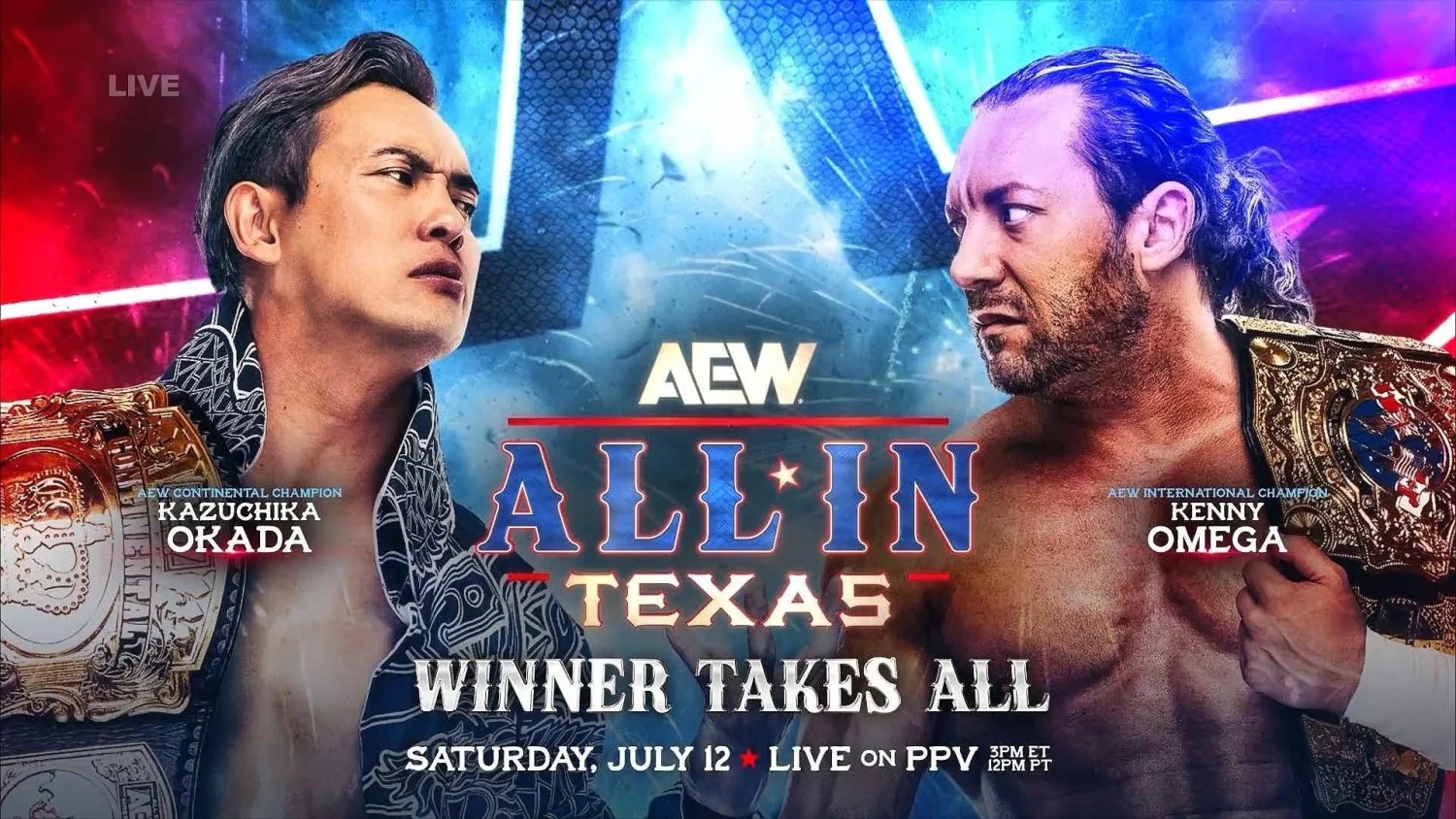
Kenny Omega made a landmark achievement by winning the G1 Climax 26 tournament in 2016, becoming the first foreign wrestler to claim this prestigious title. His groundbreaking performance during the tournament and his compelling presence both inside and outside the ring helped solidify his reputation as one of the top wrestlers globally.
Dave Meltzer, writing for The Wrestling Observer Newsletter on August 22, 2016, highlighted Omega’s exceptional display in the competition, noting that his performances in key matches established him as possibly the best overall performer in the wrestling world at that time.
The Distinction of Being the First International Champion in the G1 Climax
Kenny Omega is widely recognized as the first wrestler from outside Japan to win the G1 Climax tournament. While some previous participants like Masahiro Chono, who was born in Seattle, and Riki Choshu, whose Korean heritage has not always been publicly emphasized, had connections outside Japan, Omega’s win represented a new milestone. Within the Japanese wrestling scene, only Japanese-born wrestlers had previously been regarded as winners of the G1.
Dave Meltzer wrote on this subject, providing historical context to Omega’s achievement:
Omega was only the third who would be considered a North American (technically Masahiro Chono, Mr. G-1, was born in Seattle, and Riki Choshu was born in South Korea, and Hiroyoshi Tenzan also has a different birth name that is Korean and not Japanese, but in Japan it had been considered that only Japanese had won the tournament) to ever reach the finals of the G-1, after Rick Rude in 1992 and Karl Anderson in 2012. Several North Americans including Killer Karl Krupp, Pedro Morales, Masked Superstar, Stan Hansen and Dick Murdoch had reached the finals of pre-G-1 New Japan heavyweight tournaments, and Andre the Giant (1982 and 1985) and Hulk Hogan (1983) had won tournaments before the inception of the G-1 in 1991. What’s notable is that this was Omega’s first G-1 tournament, and one year ago he was a mid-carder trading the junior heavyweight title back-and-forth with Kushida.
Transitioning Roles and the Road to G1 Climax 26
Before 2016, Kenny Omega primarily competed as a junior heavyweight and was a key member of the Bolt Club stable. The period leading up to the 2016 G1 Climax was marked by significant shifts in New Japan Pro Wrestling (NJPW). After losing the junior heavyweight title to Kushida at Wrestle Kingdom 10, Omega and fellow wrestlers Karl Anderson and Doc Gallows turned against AJ Styles, expelling him from the Bullet Club. Styles would shortly thereafter begin his career with <a href="https://cynicaltimes.org/category/wrestling-news/wwe/”>WWE by appearing at the Royal Rumble that same month. Other NJPW stars such as Shinsuke Nakamura and the team of Gallows and Anderson departed for WWE’s NXT brand and main roster in the following months.

The departures led to new opportunities for Omega in NJPW. The IWGP Intercontinental Championship was vacated following Nakamura’s exit, and Omega captured the title by defeating Hiroshi Tanahashi in February 2016. Although he eventually lost the belt to Michael Elgin prior to the start of the tournament, Omega’s status was on the rise. Alongside The Young Bucks, he also captured the six-man tag titles, forming a sub-group within Bullet Club called The Elite, which created internal conflict with members like Tama Tonga and precipitated a Bullet Club civil war storyline.
Omega secured his place in the tournament finals after a memorable match against Tetsuya Naito on the last night of the event. This particular bout was critically acclaimed, earning Omega his first five-star rating from Dave Meltzer and being selected by Wrestling Observer readers as the best match of the tournament. In the final, Omega defeated Hirooki Goto in a contest awarded four and three-quarter stars.
The Impact of Omega’s G1 Victory and His Rivalry with Kazuchika Okada
Kenny Omega’s triumph in the 2016 G1 Climax paved the way for an iconic rivalry with Kazuchika Okada, the reigning IWGP Heavyweight Champion at the time. Their first encounter took place shortly after the tournament, initiating a series of matches that would become legendary within the wrestling community. The rivalry notably resumed eight and a half years later during their fifth singles match, held at AEW All In on July 12, 2025, at Globe Life Field in Arlington, Texas.
One of their earlier matches, the Wrestle Kingdom 11 main event on January 4, 2017, was praised as potentially the greatest wrestling match ever. Dave Meltzer awarded this contest a six-star rating—the first time in his career that the five-star scale was exceeded.
Kenny Omega and Kazuchika Okada may have put on the greatest match in pro wrestling history in the main event of Wrestle Kingdom 11 on 1/4 at the Tokyo Dome. Okada retained the IWGP heavyweight title after a spinning jumping tombstone piledriver and a fourth rainmaker, featured nearly every element of a classic match, from intensity, crowd heat, tremendous psychology, off the charts athleticism, hard hitting, timing, innovation and high risk and dangerous moves. The keys to the story is that Omega never once got to hit his one winged angel finisher, and even in defeat, came out of the show being almost clearly the best big match wrestler on the planet.
The match’s significance extended beyond just the outcome, highlighting Omega’s polished in-ring skills, charisma, and psychological storytelling, marking him as one of the premier talents in the sport despite coming up short that night.
Speculation on Omega’s Potential WWE Future After G1 Success
Following Omega’s G1 Climax victory and subsequent matches with Okada, industry experts speculated about his potential future beyond NJPW. Dave Meltzer suggested that Omega could represent a rare and elusive star that WWE had struggled to develop, given his blend of in-ring ability, charisma, and presence.
if I’m WWE, I’d not just want him, but he could be that elusive special star that they’ve been unable to make. There is the issue that he can’t wrestle matches like this nightly, or even monthly, without having a short life span on his career. But he’s got the presence, charisma, cockiness and acting ability, as well as the look that WWE is afraid to push someone who doesn’t have.
This reflection anticipated the future dynamics of Omega’s career while recognizing the physical demands and risks inherent in maintaining such a high level of performance regularly. At that time, The Elite faction was still forming, and Omega’s international breakthrough was just beginning to reshape professional wrestling landscapes.
Overview of Kenny Omega’s Rise and Its Lasting Influence
Kenny Omega’s 2016 G1 Climax win remains a pivotal moment in professional wrestling history, representing both a breakthrough for foreign wrestlers in the Japanese-predominated sport and a major step in Omega’s ascent to global stardom. By delivering two of the year’s best matches and exhibiting strong charisma in post-match moments, Omega set a new standard for performance in NJPW.
The significance of his victory continues to resonate, influencing the rise of international competitors in the G1 and expanding NJPW’s global reach. Omega’s continuing rivalry with Kazuchika Okada stands as one of the most celebrated storylines in modern wrestling, with their encounters still highly anticipated by fans worldwide.
As Kenny Omega’s career progressed, his success in NJPW served as a foundation for his later ventures, including his role in AEW and matches at major events like All In. His trailblazing G1 Climax victory not only challenged the traditional dominance of Japanese wrestlers in the tournament but also helped pave the way for a more globalized era in professional wrestling.
Our Reader’s Queries
Q. Who defeated Kenny Omega?
A. Kazuchika Okada won against Kenny Omega to claim the title of the first AEW Unified Champion. He secured the AEW International Championship at AEW All In: Texas. This event took place at Globe Life Field in Arlington, Texas.

