
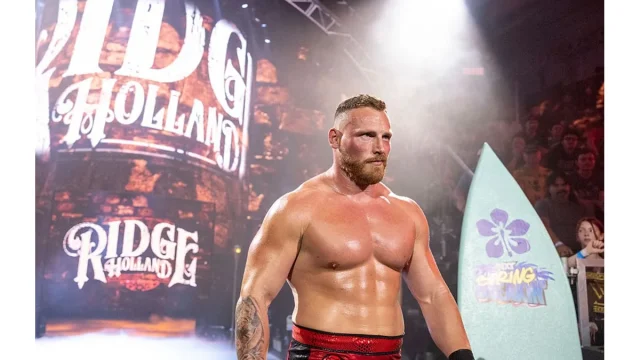
Ridge Holland’s tenure with WWE ended suddenly in early November 2025 when officials terminated his contract days before its scheduled expiration on November 14. WWE had decided not to renew his deal, but his public complaints about being left unpaid while injured and unable to perform led to an early cutoff.
By voicing his frustrations on social media, Holland violated internal agreements, which prompted WWE to cut ties sooner than initially planned. This turn of events sparked tension between Holland and the company during what was already a sensitive period in his career.
Holland Accepts Responsibility for His Early WWE Departure
In a recent interview on The Mike Rand Show, Ridge Holland openly acknowledged his role in the situation that caused his WWE release. Reflecting on his state of mind at the time, he shared,
“[I was] going through a little bit of issues, some mental issues, I wasn’t in a good place. I’d advise any young wrestler to stay off Twitter, stay off social media. Don’t vent on social media. I just didn’t really have anyone to vent to, really.” – Ridge Holland, Wrestler
“So it was more or less a coping mechanism, the wrong one. The company did what the company should have done. You know, I went online and disparaged the company. Right or wrong, in the company’s eyes, it was wrong. They took the decision upon themselves to terminate my contract early. My responsibility. I’ll take full ownership.” – Ridge Holland, Wrestler
Holland’s candid remarks reveal both his mental struggles and acceptance that his choice to air grievances publicly played a key role in WWE’s decision to end his contract prematurely. This highlights ongoing challenges wrestlers face regarding mental health and communication with their promotions.
Potential Implications for Holland and WWE
This episode illustrates the delicate balance between contract obligations and personal struggles within professional wrestling. Ridge Holland WWE release case underscores the pressures performers endure while injured and sidelined. WWE’s quick response to maintain control over brand representation by terminating Holland’s contract early signals a strict stance on how talent communicates publicly.
For Holland, this experience may serve as a cautionary tale about managing difficult emotions in the spotlight. Meanwhile, WWE’s treatment of such cases could influence how injured or out-of-contract wrestlers approach social media and their relationships with the company moving forward, affecting future negotiations and public interactions.

