
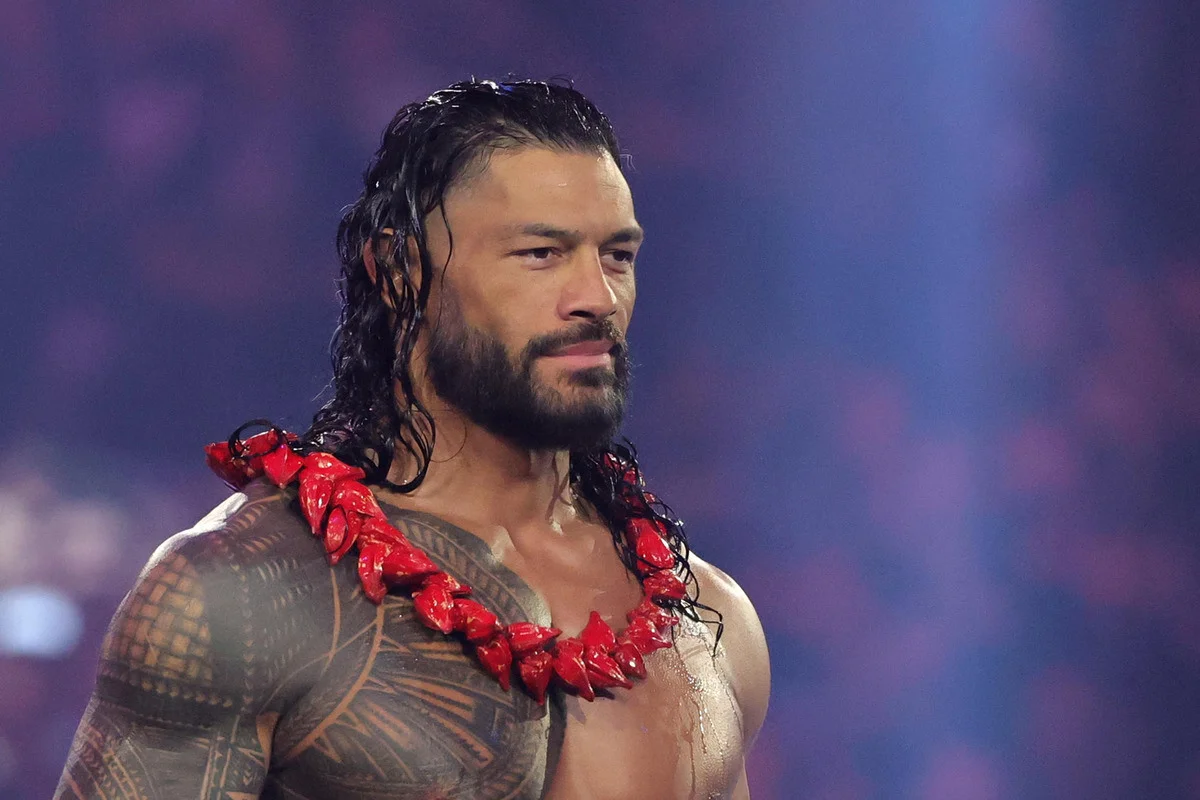
Roman Reigns’ contract status and WWE pay dispute have ignited widespread debate after reports surfaced challenging claims that the wrestling icon was asked to restructure his deal. This controversy, which pits WWE and its parent company TKO against speculation from fans and veterans alike, raises grave questions about Reigns’ future in the sport, his value to Vince McMahon’s empire, and whether rivals like Tony Khan or Hollywood might lure away the Tribal Chief.
Conflicting Reports Over Roman Reigns’ WWE Contract
According to the Wrestling Observer Newsletter, Roman Reigns is currently WWE’s second-highest-paid performer, trumped only by Dwayne “The Rock” Johnson. This directly rebuts previous comments from Jonathan Coachman, a former WWE personality, who suggested that TKO had asked Reigns to accept a pay cut or alter his deal. The conflicting narratives have fanned confusion across the wrestling landscape, putting a spotlight on Reigns’ true standing within WWE.
The tension is deeply personal for members of the legendary Samoan Dynasty. WWE Hall of Famer Rikishi, reacting to his son Jey Uso’s recent defeat at the hands of Gunther, leapt to defend his family’s contributions on his podcast. He offered an emotional, public defense of Reigns and others who share his lineage:
“Now, you’re trying to cut Roman Reigns’ fee. Here’s the guy that main-evented WrestleMania, six main events, and more to come, ’cause he still looks great. He can still draw. Y’all miss him.
“Do y’all do the math every WrestleMania, what WWE and TKO, you do the math? That’s a lot of money. That’s a bunch of money.
“And guess whose face was on that, leading that? I didn’t make this up. Y’all did. Y’all put it out there. I saw the same flyer y’all saw: Roman Reigns, Bloodline member. Jey Uso, Bloodline member. Trinity Fatu, Bloodline member.
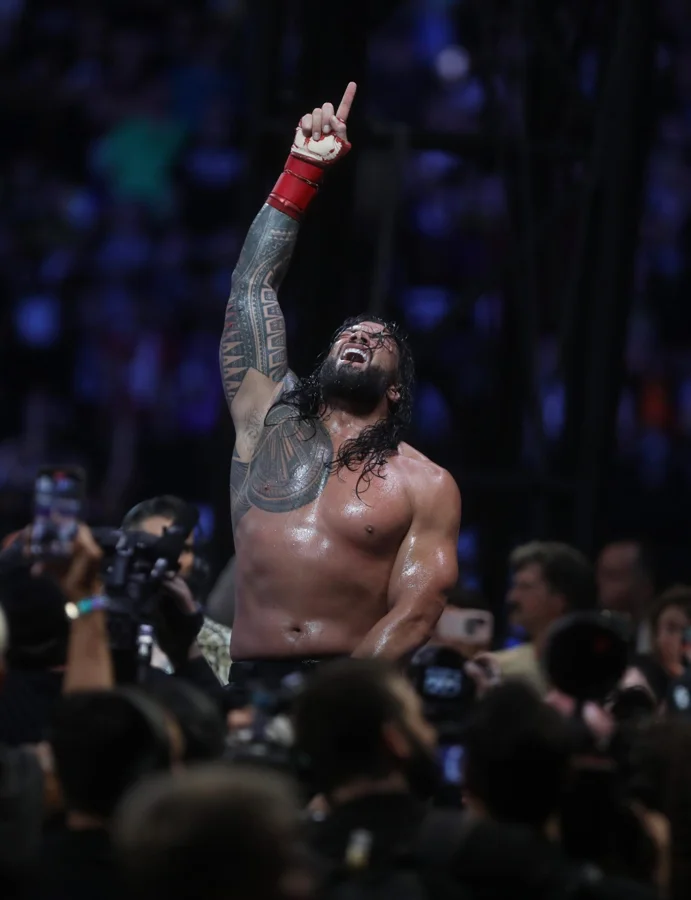
“It’s all I’m saying, hey, let’s not make up stories about bullshit. If you’re done with it, say it. You want to move on, say it, but damn it, I’ll be damned if I’m going to sit back and you try to erase the history of our family of what we put into this business.”
—Rikishi, WWE Hall of Famer
Troubled Times and Disappointing Headlines
Speculation about Roman Reigns’ future intensified after he discussed his career and WWE prospects with Vanity Fair and ESPN’s Daniel Cormier. With various insiders weighing in and rumors swirling, the situation has escalated into a major talking point among fans and industry veterans alike.
As WWE looks to cultivate younger stars, including Bron Breakker, many see Reigns as an indispensable bridge between eras. During his reign, major pay-per-view events such as SummerSlam shifted to a two-night extravaganza, further establishing his star power as a pillar of WWE’s premium programming strategy.
However, reports of a salary between $15 million and $20 million annually for Reigns have prompted financial scrutiny from TKO and WWE. With the company showing a tendency toward austerity, the value of such an expensive contract is being reevaluated, especially considering Reigns’ sparse in-ring activity. In 2025, Reigns has wrestled only three times, and since January 2024, he has appeared in just two singles matches across nine total outings, often in tag or multi-man events.
In sharp contrast to traditional sports, where performance dictates value, a pro wrestler’s worth relies on their portrayal and marketability. Once a hot topic and featured on WWE Shop, Reigns has ceded ground to John Cena, Cody Rhodes, and Jey Uso, as public intrigue around his persona has faded. His reduced presence follows a post-WrestleMania break—a common occurrence—but under unique and uncertain circumstances this year.
Loss of Title, Erosion of Relevance
During his dominance as a villain, Reigns was associated with the Undisputed Universal Title and surrounded by The Bloodline. With the championship and his on-screen “Wise Man” Paul Heyman, Reigns remained at the heart of speculation—every hiatus was met with the question of when, not if, he would return and who would challenge him.
Yet, with Paul Heyman’s betrayal at WrestleMania 41, followed by a brutal attack led by Seth Rollins and Bron Breakker, the urgency to avenge these storylines has vanished. The Tribal Chief’s absence, devoid of title or loyal allies, has left a vacuum where his relevance once thrived. Without a clear narrative or compelling return, fans have voiced concerns over WWE’s management of his persona, casting a shadow over his future leverage in negotiations.
In today’s WWE, leadership under Paul Levesque is focused on grooming Cody Rhodes and, increasingly, Seth Rollins as top stars. Notably, rumors of a power struggle have emerged, with Levesque reportedly at odds with TKO board member and former champion Dwayne “The Rock” Johnson, who remains one of Reigns’ strongest supporters. Should WWE’s creative decisions continue to minimize Reigns, he may feel compelled to seek opportunities elsewhere—a move that could dramatically shift the power dynamics at the negotiating table.
Hollywood’s Allure and the AEW Temptation
One possibility for Roman Reigns is a high-profile leap to Hollywood. With his WWE contract scheduled to expire after WrestleMania 42 in 2026, he could easily emulate the transition made by Dave Bautista, whose breakout movie success fundamentally altered his career trajectory. If Reigns finds similar acclaim, his wrestling days might be finished for good.
At the same time, AEW, headquartered in Jacksonville under the direction of Tony Khan, looms as a possible destination if contract renewal talks stall. Industry watchers speculate about Khan’s willingness to outbid WWE with an offer that could reportedly double Reigns’ current salary, potentially making him the highest-paid wrestler in history. Tony Khan, AEW’s founder, has previously demonstrated a willingness to make aggressive moves to elevate his company’s profile, even in an era when AEW has battled declining television ratings and fan engagement.
Historic Analogies: Lessons from Wrestling’s Past
The wrestling business is no stranger to disruptive megadeals. In the 1990s, World Championship Wrestling was struggling, even with a roster featuring Ric Flair, Sting, and Lex Luger, despite the financial might of Ted Turner. Their fortunes changed dramatically after Eric Bischoff, promoted to Executive Producer in 1993, orchestrated the blockbuster signing of Hulk Hogan. Years later, Bischoff explained the thinking behind that pivotal decision:
“I didn’t bring Hulk in to turn a profit initially,”
—Eric Bischoff, Former WCW Executive Producer
“I brought Hulk Hogan in to change the narrative about WCW on the business-to-business side of the equation.”
—Eric Bischoff, Former WCW Executive Producer
Bischoff made clear that securing Hogan did more than just bolster the roster; it transformed WCW’s reputation with sponsors, pay-per-view partners, ad agencies, and licensing companies.
“That bringing Hulk Hogan in would change the conversation we were having with potential sponsors, licensing companies, our pay-per-view partners, and advertising agencies.”
—Eric Bischoff, Former WCW Executive Producer
This calculated risk paid off when WCW leveraged Hogan’s stardom into higher ratings, attendance, and credibility. Ultimately, WCW surged ahead of WWE in the historic Monday Night Wars, becoming the industry leader for a remarkable 83 consecutive weeks as celebrities and mainstream attention followed.
Industry observers draw direct comparisons between what Hogan did for WCW and what Reigns could do for AEW. A high-profile move of this magnitude could redefine AEW’s future and tilt the balance of wrestling power once more.
AEW’s Precarious Position and the High Stakes of a Major Signing
Despite assembling a roster full of acclaimed competitors and signing coveted free agents, AEW under Tony Khan has experienced waning ratings and attendance, particularly after turbulent episodes involving stars like CM Punk and controversial booking decisions with talent such as Ricky Starks and Rey Fenix. This slide in public perception has left AEW searching for the kind of injection of credibility only a blockbuster signing can provide.
Khan has taken a public stance against being undermined by WWE or TNA, relying on his financial resources for support. Still, his decisions are sometimes marred by impulsive social media outbursts and inconsistent leadership. The acquisition of Roman Reigns would go beyond typical “big-name” signings, representing a seismic shift aimed at not just survival but winning the industry’s top spot.
To maximize the impact of such a mega-deal, AEW would be obligated to cater to Reigns as the centerpiece, revamping its infrastructure and creative direction to fully leverage his appeal. Reports indicate Khan could consider offering up to $40 million for a two-year contract, a sum that would make headlines well beyond the wrestling world.
While some are concerned about Reigns’ preference for a light schedule, the expectation is that his draw would transcend in-ring performances, bestowing AEW with renewal, legitimacy, and marketing power—attributes the company sorely needs. By recruiting Reigns, Khan would also send a critical message to other wrestlers, including those disaffected by WWE or looking for a stable platform, that AEW is a viable, ambitious destination.
The Potential for Transformation — and Aftershocks in WWE
If Tony Khan can successfully secure, satisfy, and position Roman Reigns at the core of AEW, the implications extend far beyond the weekly ratings race. The move could spark a domino effect, especially if other members of the Bloodline or the broader Anoaʻi family, motivated by disappointment or solidarity with Rikishi’s family-first doctrine, choose to follow suit. This would reshape AEW’s identity and perhaps the industry’s competitive equilibrium for years to come.
The uncertainty has left WWE at a critical juncture. Most analysts believe that financial incentives and Reigns’ close ties with figures like The Rock will ultimately lead to a renewed contract. However, if either Hollywood or Tony Khan steps up with an offer commensurate with Reigns’ value, WWE may be forced to reassess what its Tribal Chief is worth at the negotiating table.
WWE, grappling with TKO’s corporate priorities and leadership shifts championed by Paul Levesque, now faces a pivotal test: can it hold on to the superstar who has defined an era? With momentum slipping and new directions for stars like Cody Rhodes and Seth Rollins, the answer to that question will shape the sport’s next chapter and the legacy of Roman Reigns himself.

