
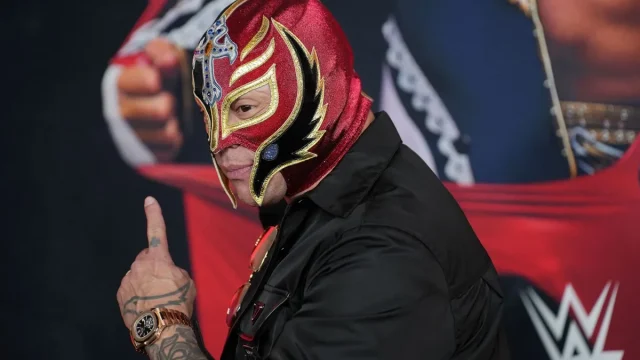
Rey Mysterio’s reintroduction of his mask in WWE defies the long-standing traditions of lucha libre, the Mexican wrestling style where the mask holds deep cultural and professional significance. Normally, once a luchador loses their mask in a lucha de apuestas match, they are prohibited from wearing it again, a rule reinforced by Mexico’s wrestling commissions to protect fans’ trust and maintain the value of these high-stakes matches. However, when Rey Mysterio Jr. signed with WWE, a U.S.-based promotion not governed by Mexican commissions, he was encouraged by Vince McMahon himself to wear his mask once more, a decision that shaped his identity on the American stage.
This distinction explains why Mysterio could return to the mask in WWE while contemporaries like Psicosis and Juventud Guerrera did not, even though all three had lost their masks in WCW matches prior. The U.S. wrestling environment allows for more creative freedom outside of Mexican lucha libre regulations, enabling Mysterio’s mask to become an iconic element of his WWE persona again.
Mexican Lucha Libre Mask Traditions and Commission Regulations
In Mexican lucha libre, masks are sacred symbols tied to a wrestler’s mystique and legacy. Losing a mask in a wagered match (lucha de apuestas) mandates that the wrestler reveal their identity and never don the same mask again. This is enforced not just by tradition but by formal lucha libre commissions across Mexico, which oversee the sport similarly to state athletic commissions in the United States.
The rationale behind these regulations lies in protecting the fans’ investment—fans pay premium prices to witness mask matches with the understanding that a significant gamble is on the line. Permitting wrestlers to re-mask after a loss would devalue these matches and breach the trust fans place in the sport’s integrity. Hence, the commissions strictly prevent such actions.
Rey Mysterio’s Transition to WWE and Mask Reinstatement
Rey Mysterio Jr., Psicosis, and Juventud Guerrera all initially lost their masks during WCW storylines, with no plans to wear them again. However, when Mysterio transitioned to WWE, the company’s leadership decided to revive his masked character. Mysterio himself recounted in interviews on podcasts hosted by Ryan Satin and Kurt Angle that Vince McMahon specifically ordered him to wear the mask, an instruction he complied with, despite lucha traditions.
Because WWE operates in the United States, the Mexican lucha commissions hold no authority over its decisions. For example, Psicosis lost his mask in Mexico before WCW but still wore it during U.S.-based events without intervention. Interestingly, when Mysterio wrestled for WWE in Mexico for the first time, he proactively sought and received special permission from the Mexican wrestling commission to wear his mask there, an uncommon exception that likely stemmed from WWE’s substantial business influence and the promotional leverage they hold in Mexico.
Reasons Behind Psicosis and Juventud Guerrera’s Mask Absence in WWE
Unlike Mysterio, Juventud Guerrera and Psicosis did not wear masks in WWE despite their masked history. This appears to have been a creative choice rather than a regulatory issue. WWE, holding full control over character presentation, simply did not view masked gimmicks as necessary or fitting for those wrestlers’ personas. Had WWE desired for them to wear masks, it would have been possible, similar to Mysterio’s situation.
A Glimpse into Sid and Bret Hart’s Rivalry on Major Broadcasts
While exploring professional wrestling history, it is notable that only three televised one-on-one matches between Sid Vicious and Bret Hart occurred on cable or pay-per-view. The initial encounter took place on December 15, 1996, at the In Your House 12 event in West Palm Beach, Florida, featuring Sid as WWF Champion. Sid retained his title in a match disrupted by interference from Shawn Michaels, Steve Austin, Davey Boy Smith, and Owen Hart.
The second match on February 17, 1997, aired on Monday Night Raw from Nashville, Tennessee, saw Bret defending the WWF Championship against Sid. Despite nearly securing a victory with the Sharpshooter submission, Bret was thwarted by a chair shot delivered by Steve Austin, which enabled Sid to powerbomb him and regain the championship.
The third and last bout aired on March 17, 1997, just before WrestleMania XII, featured Sid defending his WWF title inside a steel cage in Syracuse, New York. Both The Undertaker and Steve Austin interfered—Austin aiding Bret and Undertaker assisting Sid—to ensure their WrestleMania matches remained championship contests. Ultimately, the interference resulted in Sid’s retention and precipitated Bret Hart’s now-famous unscripted rant, setting up one of the most memorable double turns in wrestling history.
WCW’s State in Its Final Year and Attempts at Revival
In 2001, shortly before its acquisition by WWF, WCW showed signs of improving the quality of its programming. It featured a long-term storyline with Scott Steiner systematically eliminating leading babyfaces and made concerted efforts to elevate emerging talents like Sean O’Haire, Mark Jindrak, Shane Helms, and Jason Jett. Established wrestlers such as Lance Storm and Mike Awesome were granted more creative freedom with fewer gimmick interferences, leading to stronger in-ring performances.
Despite these creative boosts, WCW struggled significantly with its business operations, unable to recover financially or operationally before the WWF purchase finalized. The booking improvements, though noteworthy, came too late to reverse the company’s broader decline.
Evaluating the Future Roles of New WWE Talent
Recent WWE signings and call-ups demonstrate varied potential across the roster. Trick Williams shows promising signs of becoming a main event-level performer through his ability and instincts, demonstrated in high-profile confrontations such as with Randy Orton. Je’von Evans, although athletic and visually impressive, appears more suited for long-term midcard roles akin to Kofi Kingston, with potential for solid fan support through dynamic performances.
Oba Femi stands out as an exciting prospect, with talent that exceeds expectations for someone with less than four years in the industry. His progression suggests he could credibly compete for top-level championships soon. Royce Keys, with an inconsistent usage on AEW programming, presents an uncertain trajectory but may solidify as a strong upper midcard presence.
Lash Legend benefits most from her visual presentation rather than in-ring ability, facing challenges that could hinder her longevity if rapid improvement is not achieved. Conversely, Jordynne Grace represents a consummate talent deserving championship opportunities and mainstream success without developmental delays. Matt Cardona, despite previous popularity boosts, seems unlikely to advance beyond transitional roles before an eventual departure, mirroring past late-career WWE returns.
Wrestlers’ Acceptance of Risky In-Ring Moves and Hygiene Concerns
Regarding unusual in-ring maneuvers such as Mankind’s mandible claw, no notable instances have been documented of wrestlers refusing to participate due to hygiene concerns. This move remains a unique and accepted part of his repertoire without reported backstage resistance.
Recounting Sgt. Slaughter’s Championship Win Story
Sgt. Slaughter has recounted on multiple occasions that his victory over The Ultimate Warrior for the WWF Championship was an unplanned outcome caused by Warrior’s impaired condition after a scepter strike by Randy Savage. Slaughter describes his win as a surprise to himself. However, this narrative is widely viewed as fabricated, with credible sources confirming the title switch was premeditated to transition the belt back to Hogan through Slaughter as a transitional champion, rather than a rematch with Warrior.
This story endures unchallenged likely because it circulates in informal interviews where hosts are either less knowledgeable or reluctant to dispute Slaughter, coupled with its relatively low profile among more rigorous wrestling journalism outlets.
Comparing the Athleticism of Vader and The Big Show
When assessing purely athletic capability during their primes, The Big Show arguably surpasses Vader due to his rigorous and sustained match schedule. Show frequently wrestled year-round in singles competition multiple times per week, often on national television, demonstrating exceptional endurance. In contrast, Vader’s schedule in Japan was more segmented, featuring intense six-week tours followed by rest periods, and generally involved more tag or multi-man matches reducing overall wear.
Nevertheless, Vader is celebrated for delivering a greater number of memorable matches. From an athletic standpoint, however, Show’s longevity and ability to maintain high performance across a demanding calendar places him ahead.
Wrestlers Frequently Misremembered by Contemporary Fans
Several wrestlers have vastly different legacies within and outside WWE, often misunderstood by today’s audiences due to sanitized or altered portrayals in the company’s controlled narrative. The Bushwhackers notably transformed from the violent, hardcore Sheepherders in regional circuits to goofy, child-friendly characters in WWE, representing one of the most striking legacy divergences.
Tony Anthony, known as The Dirty White Boy, was a credible main event presence in Smoky Mountain Wrestling but became remembered primarily as the comedic plumber gimmick in WWE. Similarly, Makhan Singh demonstrated solid heel work in Canadian promotions before WWE recast him as Bastion Booger, a character lacking in wrestling credibility.
Pat Patterson and Jerry Brisco, revered as technical wrestling legends in earlier eras, are now often recalled by younger fans as comedic foils rather than for their mat expertise, highlighting the effects of narrative control. Jerry Lawler, Jimmy Hart, and Kamala’s careers also reflect such contrasts between their regional reputations and WWE portrayals.
The Freebirds’ Abrupt Departure from WWF Explained
The Freebirds disappeared quickly after their debut in WWF largely due to backstage tensions with Andre the Giant, one of the most influential figures in the company. Known for their heavy partying and disruptive behavior, the Freebirds reportedly provoked Andre to the point he effectively “fired” them through his displeasure, ending their WWF tenure despite his lack of formal authority to do so. This incident underscores the significant backstage power dynamics affecting wrestling careers.
Looking Ahead to Wrestling’s Ongoing Evolution
Rey Mysterio’s return to wearing his mask in WWE symbolizes the complex intersection of cultural tradition and modern wrestling business practices, illustrating how regional rules adapt when crossing borders. WWE’s influence in Mexico permits exceptions to historic lucha libre conventions, enhancing Mysterio’s legacy and WWE’s market appeal there.
The evolving careers of new talent such as Trick Williams, Oba Femi, and Jordynne Grace will shape the company’s future, alongside continued efforts to revive or reinterpret wrestling legends and storylines. Understanding the roots of traditions like mask sanctity alongside the commercial realities of global wrestling promotions remains vital to appreciating the sport’s dynamic nature.

