
The upcoming two-night WWE SummerSlam is set to take place at MetLife Stadium in East Rutherford, New Jersey, featuring John Cena and Cody Rhodes competing for the Undisputed WWE Championship in a WrestleMania 41 rematch. As the 38th edition of WWE’s biggest summer event approaches, it is worth reflecting on some of the most significant missteps that have occurred throughout SummerSlam’s long history.
Since its inception in 1988 in New York City, SummerSlam has delivered countless memorable moments. However, certain decisions and match outcomes have left fans and wrestlers alike questioning directions taken by WWE, marking some of the most controversial errors in wrestling’s timeline. Below are six key mistakes that have stood out over the years.
Jinder Mahal’s Controversial WWE Championship Run
One of the more debated moments in recent SummerSlam memory was when Jinder Mahal captured the WWE Championship in 2017. His victory symbolized a major milestone after returning to WWE and working hard to secure a main-event spot. Despite this, many viewers and critics responded unfavorably to Mahal’s reign as champion.
At that year’s SummerSlam, Shinsuke Nakamura, fresh off an impressive NXT run and a high-profile victory over John Cena, was set for a title shot against Mahal. WWE chose to keep Mahal as champion instead of building Nakamura’s momentum further. Although Nakamura won the Royal Rumble the next year, his subsequent WrestleMania 34 loss to AJ Styles stalled the trajectory that could have elevated his career much earlier, especially since Mahal slipped into midcard status after dropping the title.
CM Punk’s Interrupted Championship Triumph in 2011
In 2011, CM Punk emerged as a breakout star during what was dubbed the Summer of Punk, peaking with a well-received victory over John Cena at Money in the Bank. At SummerSlam that year, Punk defeated Cena again to become the Undisputed WWE Champion, marking one of the hottest periods for WWE in recent memory.
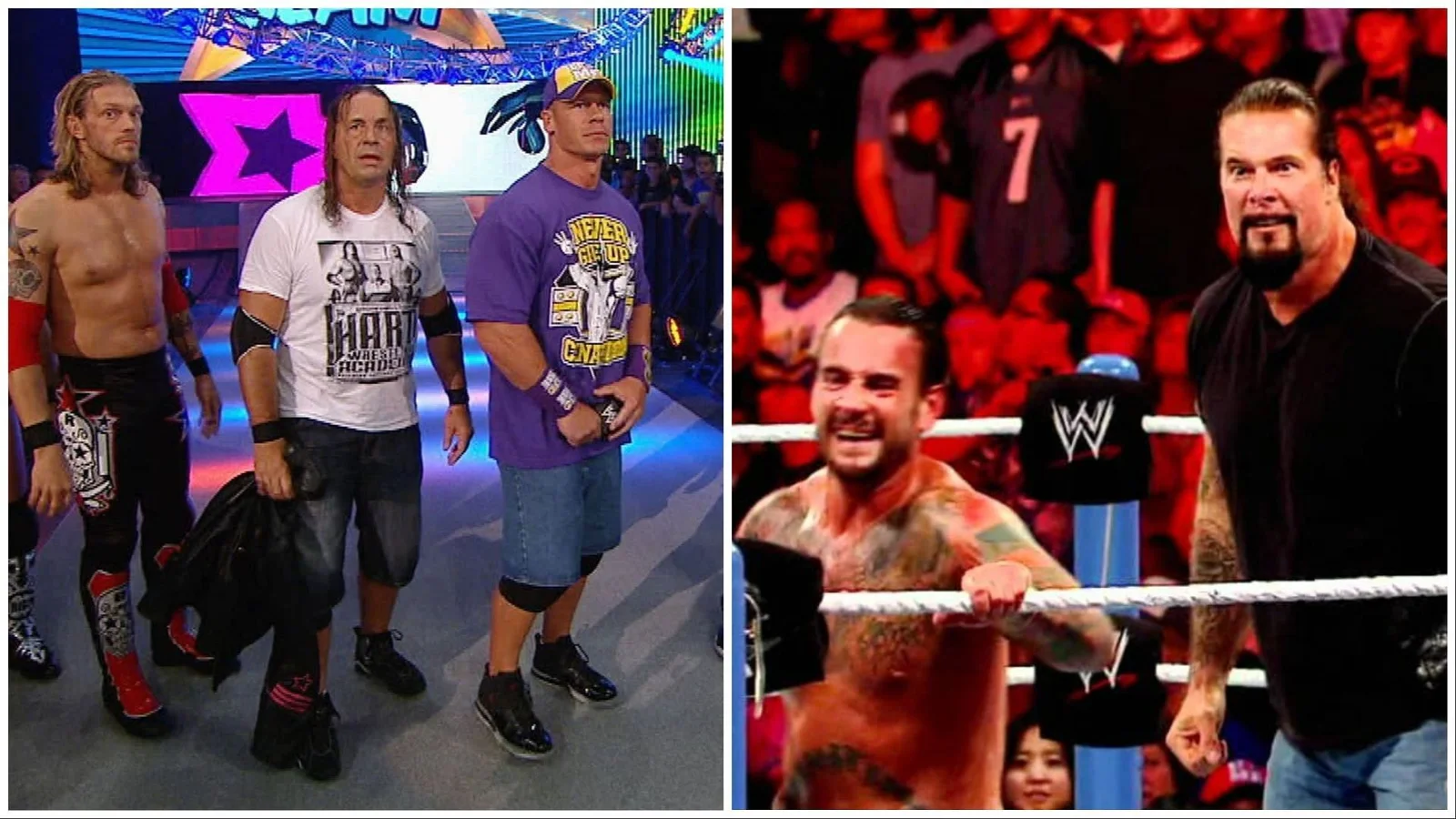
However, the celebration was cut short when Triple H and Kevin Nash attacked Punk, immediately leading to Alberto Del Rio cashing in his Money in the Bank contract to win the title. This angle was criticized for being unnecessary and confusing, especially since Nash was unable to compete after the assault. Despite this setback, Punk maintained a significant 434-day reign as champion, from late 2011 through early 2013, softening the blow of this SummerSlam storyline.
Hulk Hogan’s Final WWE Match and Its Impact on Randy Orton
Hulk Hogan’s last WWE match took place at SummerSlam 2006 against Randy Orton, who was then still establishing himself as “The Legend Killer.” A win over Hogan would have been invaluable to Orton’s career growth, adding to his legacy alongside other top-tier competitors he had already defeated. Instead, Hogan won the match, slowing Orton’s push to elite main-event status by roughly a year.
Orton’s eventual rise to superstardom, rivaling John Cena as a top babyface, could have been accelerated by a Summerslam victory over Hogan. The decision to keep Hogan strong delayed what might have been a more rapid ascent for Orton in WWE’s upper echelons.
Goldberg’s Streak Ended Prematurely at SummerSlam 2003
Goldberg was a dominant force in WCW due to his undefeated streak, an aura that made him a near-unstoppable superstar. When he made his WWE debut in 2003, he quickly defeated The Rock, starting what seemed like the beginning of another dominant run.
However, Goldberg’s winning streak was cut short in less than five months, culminating in a loss to Triple H. At SummerSlam 2003, Goldberg nearly captured the World Heavyweight Championship and appeared to have momentum for a long title reign. Yet, instead of extending this streak, WWE opted to end it. This decision weakened Goldberg’s initial WWE run, which later culminated in a disappointing WrestleMania 20 match against Brock Lesnar.
Lex Luger’s Near Miss and Missed Opportunity at SummerSlam 1993
In 1994, after Hulk Hogan left WWE for WCW, Vince McMahon attempted to position Lex Luger as the new all-American hero in WWE. A key moment came at SummerSlam 1993 when Luger faced Yokozuna for the WWE Championship.
Luger technically won the match by countout, but since titles do not change hands this way, he did not capture the championship. Rather than extending the rivalry to allow Luger to eventually win, his immediate celebration was widely seen as illogical, which damaged his credibility. Although Luger eventually found success in WCW, this moment at SummerSlam was a missed opportunity to solidify his place as a top star in WWE.
The Nexus’ Defeat at SummerSlam 2010 and Its Consequences
Before the rise of CM Punk in summer 2011, the summer of 2010 belonged to The Nexus, a rebel group led by Wade Barrett that shook WWE by attacking top stars and management, including Vince McMahon. Their spotlight moment came at SummerSlam 2010, where they faced Team Cena, a collection of top WWE talent including John Cena, Bret Hart, Edge, Chris Jericho, R-Truth, John Morrison, and Daniel Bryan.
Despite needing a win to establish themselves as a dominant faction, The Nexus lost the match after Cena overcame the odds. Key members like Edge and Jericho reportedly wanted The Nexus to emerge victorious, and Cena himself acknowledged that his team’s win did not benefit Barrett’s group. The loss changed WWE’s trajectory for The Nexus and its original members, potentially altering their career paths significantly.
Historical Lessons and Their Impact on Wrestling’s Future
While SummerSlam has delivered some of the most electrifying moments in wrestling, these six disappointments highlight how critical booking decisions can have lasting consequences on wrestlers’ careers and WWE’s storylines. From missed pushes for future stars like Shinsuke Nakamura and Randy Orton to hastily ended runs such as Goldberg’s and Lex Luger’s, these mistakes serve as reminders of the delicate balance between storytelling and star development.
As WWE prepares for this year’s SummerSlam, fans and analysts alike anticipate the event with renewed hope that history will not repeat itself and that the company will make decisions that strengthen rather than hinder its talent and narratives.

