
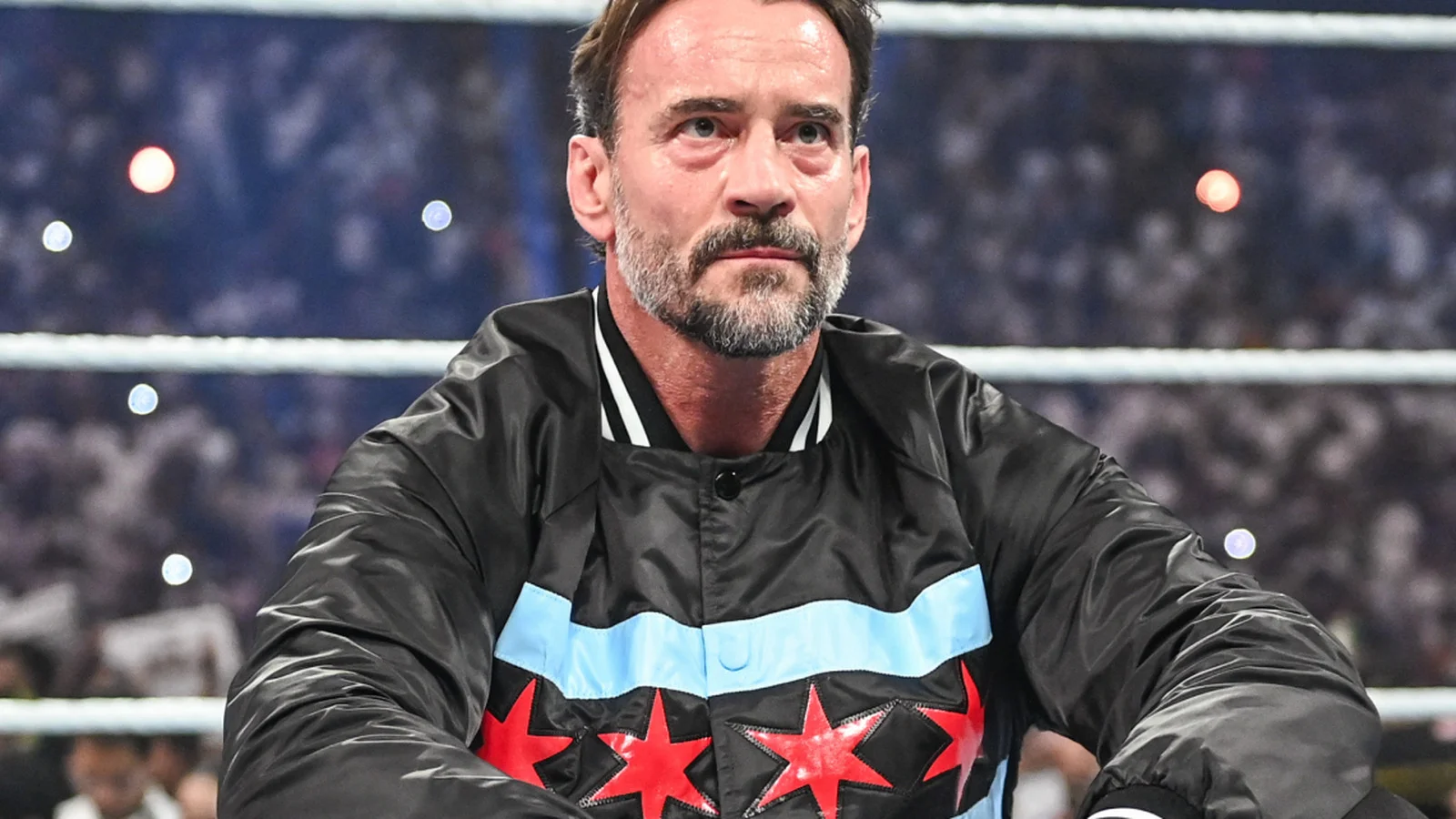
CM Punk recently described his ongoing role within WWE as that of a player-coach, emphasizing his willingness to support younger wrestlers while refraining from offering unsolicited guidance. During an interview with Allenownz Wrasslin, Punk acknowledged that despite his experience, he remains deeply impressed by certain wrestlers in the locker room even today. This setup allows him to assist others while respecting their autonomy.
Respecting the Next Generation While Maintaining Humility
When asked about GUNTHER’s excitement over facing him in the ring, Punk reflected on the respect he holds for GUNTHER rather than viewing him strictly as a younger talent. He conveyed that being admired by emerging wrestlers brings a sense of humility, recalling his own early career moments. Punk was honest about the contrast between his on-screen persona—“The Best in the World”—and his real-life mindset backstage, where self-doubt and humility are common.
He explained,
“Well, it’s weird, right? Because I am, contrary to everything you see on screen, I’m not one to champion myself. When I’m on screen? Yeah, ‘Best in the World.’ What a ridiculous thing to say. But that comes from me coming from nothing, like, what am I supposed to do? Am I supposed to go, ‘Yeah, I don’t think today’s my day, guys. I’m gonna give it my best, but sh*t, I’m gonna lose?’ That doesn’t resonate. That is a real human emotion that goes through my head, and I think goes through a lot of other people’s heads; it doesn’t fly for an on-screen character. I do think I have a wealth of knowledge. I do think I can help out. I do know for a fact that I have paved the way for a great many people, whether they love me or they hate me. Those are just facts. If anybody backstage wants to ask me questions, pick my brain, capitalize on what they might think can help them, I’m all ears.”
Choosing When to Offer Advice in the Locker Room
Punk emphasized the importance of not imposing his opinions unless they are sought after, explaining that he has experienced both giving and receiving unsolicited advice in his career. He recognizes the value of listening to multiple perspectives and is open to the best ideas prevailing in any situation. At 46 years old, he brings a broad perspective that blends respect for tradition with openness to new methods.
He shared,
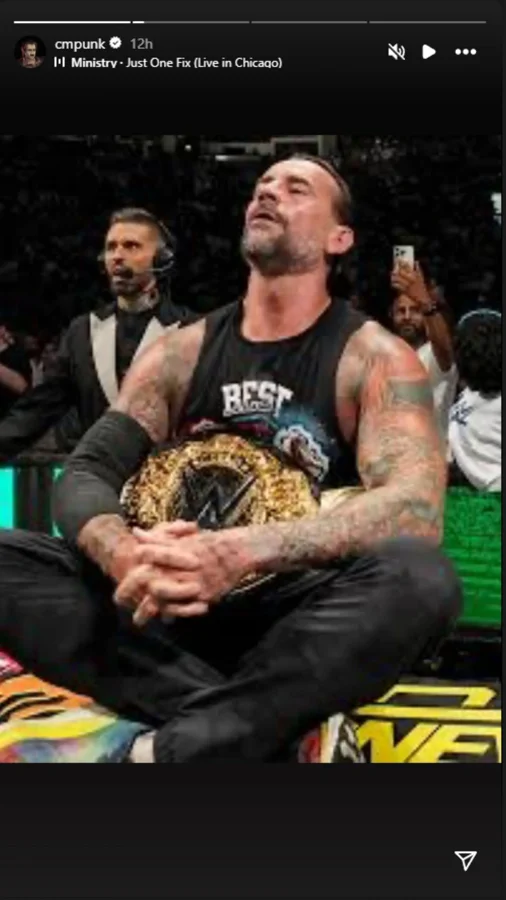
“I do not offer unsolicited advice because I’ve been there where I have a pretty good idea. I know what I’m doing, and somebody will say, ‘Hey, don’t do this.’ Or an old timer will be like, ‘Hey, you know, don’t do that anymore, because you’re making me look bad.’ My perspective now, at 46, is that I see all sides. I definitely don’t think my ideas or my way of doing something is the only way to do anything. I’m all about the best voice; the best idea in the room wins. But it means a lot to me, and it is my great responsibility to be able to be that for anybody.”
CM Punk on Being Viewed as a Role Model in WWE
Punk considers the admiration he receives from peers and younger wrestlers as a significant achievement. He likens it to his own reverence for legends such as Roddy Piper, Bret Hart, Eddie Guerrero, and Rey Mysterio, recognizing that being looked up to in the locker room is a sign of success in the wrestling business.
He said,
“I don’t see GUNTHER in that way. So if you see him in that way, that’s flattering for me. That gives me pause, that makes me go, wow, because I look at him and I’m in awe of him, you know? So it’s to me, it’s a heavy responsibility. It’s a burden in the best way, because it just means they look at me the way I looked at Roddy Piper, Bret Hart, Eddie Guerrero, guys that I couldn’t believe, ‘I can just call Eddie Guerrero and ask him a question?’ and he didn’t care. He encouraged it, and wanted me to speak to him. There’s other guys in the locker room, like Rey Mysterio, that are around that I still look at in awe. If anybody looks at me like that, that to me just means I’ve been successful in this business, and it’s an accomplishment.”
—CM Punk
Tommy Dreamer Criticizes WWE: Unreal Scene Involving CM Punk
ECW icon Tommy Dreamer recently spoke about a controversial scene featuring CM Punk in the Netflix docuseries WWE: Unreal. Dreamer expressed dissatisfaction with a reenacted confrontation between Punk and a WWE writer, calling the moment awkward and improvised. He explained during the Busted Open Radio podcast that the scripted nature of the scene diminished its impact and left him puzzled.
He recalled,
“I’ll tell you the one thing I hated, when the writer pushed CM Punk, and then they showed Seth Rollins and CM Punk. I thought, not that that was real, I thought that was kind of ad libbed … When I saw the writer push Punk, she didn’t physically push him, but she got in his face. I was just like, ‘That’s a weird conversation,’ and then, oh, wait, [I realized] they reenacted it. And then that’s why I was just like [sighs], ‘Why?’”
—Tommy Dreamer
Dreamer Reflects on Raw ECW Fights as Part of Wrestling History
Dreamer also reminisced about the intense physicality of the ECW Originals during their time in the 1990s, describing spontaneous fights that were fought with real aggression and improvisation. He illustrated a scene involving himself and Raven, where a bar fight escalated before the arrival of the police, underscoring how raw and unfiltered wrestling culture was in that era.
He recalled,
“There’s people who are hanging out with wrestlers and him and people are trying to break it up. I am pushing everybody away. We don’t even tell the wrestlers that are there. Pitbull Anthony, he’s trying to break it up because he’s friends with both of us. I beat up Raven; I literally throw him down a flight of steps and I busted open his eye. He cuts a promo, and we got to go because the cops are coming. We get in the car and we drive away. That’s how we did things.”
—Tommy Dreamer
Cody Rhodes on His Leadership Role as WWE’s Top Star
Cody Rhodes has embraced his position as WWE’s leading figure, likening himself to a quarterback who acts on the direction of others while occasionally contributing his own expertise. On WFAN, Rhodes discussed his collaborative relationship with WWE executives such as Nick Khan, Triple H, and The Rock, emphasizing his trust in their judgment and his willingness to defer to their experience.
He explained,
“Triple H, Nick Khan, and The Rock are aware I have an instinct and education on it and aware that I have my own opinions of maybe what I could do and should do. However, coming in here, one of the greatest gifts in coming back to WWE was, ‘You guys tell me. Tell me. I’ve been too caught up on doing all of this on my own, tell me the play.’ (I’m the) quarterback of WWE, but you tell me the play. I have to trust you. On Unreal, you’re seeing Michael Hayes and Paul Heyman, these are far greater minds than I have. ‘You guys know more than I know. I have my gut, but you know more than I know. I’m not afraid to ask you. Tell me where we’re running.’”
—Cody Rhodes
Rhodes also addressed his ability to change plans when necessary, acknowledging his respect for those who have forged wrestling history. He said,
“I think I’ve earned the ability [to call an audible], but I rarely do it. I want to know if you were right. If you were right, where did you learn that? Michael, is this what you did with Kerry Von Erich. Mr. Heyman, is this a piece from the Dangerous Alliance? Triple H, was this from your own run? I want to know. Nine times, pretty much ten times out of ten, that crew is typically right. They did it at a high level.”
—Cody Rhodes
Implications of CM Punk and Cody Rhodes’ Roles for WWE’s Future
CM Punk’s player-coach model represents a blend of mentorship and humility that respects the evolving landscape of WWE talent, while Cody Rhodes’ quarterback approach highlights teamwork and trust in leadership. Their contrasting yet complementary attitudes illustrate how WWE integrates experience and innovation to stay competitive. Punk’s refusal to give unsolicited advice encourages dialogue and growth, whereas Rhodes’ readiness to follow guidance but call audibles fuels flexibility in WWE’s creative direction.
As both figures shape WWE’s present and future, their influence on locker room culture and storytelling will likely continue to affect talent development and fan engagement. The mutual respect among wrestlers, legends, and executives sets a tone of collaboration that could drive WWE’s evolution amid a demanding entertainment environment.

