
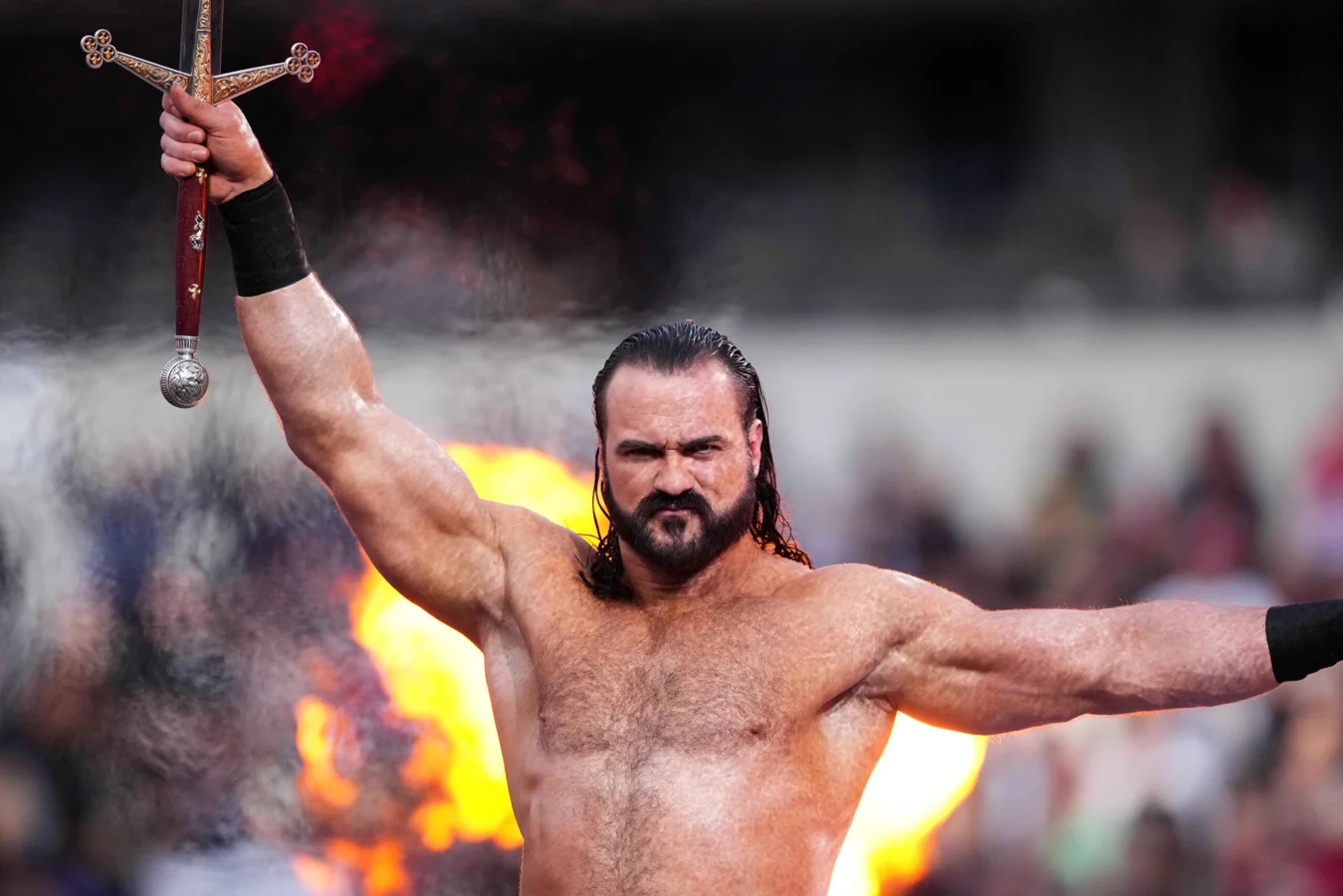
Drew McIntyre’s recent remarks have ignited a firestorm after he drew a parallel between CM Punk and the infamous cult leader Charles Manson, drawing heated criticism from fans and critics across the wrestling world. The Drew McIntyre controversial comparison of CM Punk to Charles Manson has intensified their already tumultuous WWE feud, blurring the line between scripted rivalry and personal animosity.
Escalating Tensions Between WWE Rivals
Rivalries in WWE often play out within the framework of storylines, but the dynamic between Drew McIntyre and CM Punk has appeared especially personal, raising questions about the depth of their hostility. Throughout 2024, McIntyre and Punk clashed in high-profile events, including epic battles at SummerSlam and a dramatic steel cage match at Hell in a Cell. These confrontations have kept audiences invested and speculation rampant about what might fuel their animosity beyond the squared circle.
The ongoing tension reached new heights when McIntyre, the “Scottish Warrior,” made headlines with remarks directed at his wrestling adversary. During a discussion on the Gorilla Position Podcast, McIntyre elaborated on his perspective of Punk’s influence and presence within WWE circles and beyond.
McIntyre’s Contentious Comparison and Reaction
While speaking with the Gorilla Position Podcast, Drew McIntyre commented on CM Punk’s charisma and ability to rally support. He said:
“He has a Charles Manson-like quality. The way he’s just able to convince people to do his bidding and love him. Even in Scotland. It just has that weird thing that certain people in history have. Dictators and the likes.”
—Drew McIntyre, WWE Superstar
This bold statement quickly rippled through the wrestling community, sparking immediate backlash. McIntyre’s remark compared Punk to a historical figure widely reviled for orchestrating brutal crimes and leading a cult responsible for several notorious murders. The reference, invoking the legacy of Charles Manson, angered many who felt the analogy was excessive given Manson’s infamous standing in criminal history.
Fueling the intensity further, McIntyre implied that his dislike of Punk stretches beyond the realm of scripted entertainment, describing their disdain as genuine and not restricted to in-ring performances. This revelation, alongside the inflammatory analogy, amplified the response from both dedicated fans and critics in various wrestling circles.
Historical Context: Charles Manson and the Shadow of His Crimes
To understand the weight of Drew McIntyre’s words, it is necessary to revisit who Charles Manson was and why his name carries such a notorious reputation. Manson, born on November 12, 1934 in Cincinnati, Ohio, endured a troubled childhood and frequently encountered the criminal justice system for theft and burglary during his youth. Following his release from prison in 1967, Manson relocated to San Francisco, where his infamy would take root.
In San Francisco, Manson attracted a devoted circle of followers who became known as the Manson Family. Through a mix of manipulation and a twisted ideology, he convinced these loyalists to carry out a string of gruesome murders. Among the most shocking was the killing of actress Sharon Tate in August 1969, which sent shockwaves through the Hollywood community and beyond.
Manson’s ideology, partly inspired by misinterpreting the Beatles’ song Helter Skelter, foresaw an impending race war. Under his direction, his followers set out to commit acts of violence meant to incite chaos. While Manson denied direct participation in the crimes, he was ultimately charged with first-degree murder for Tate’s death and given a death sentence later commuted to life imprisonment. His legacy remains among the darkest in American criminal history and continues to evoke strong reactions wherever his name is drawn into public discourse.
The Impact and Fallout From McIntyre’s Accusation
The comparison of a sports entertainer like CM Punk to a figure such as Charles Manson has evoked debates across both wrestling fan communities and broader media outlets. Many contend that likening anyone in the world of entertainment to a convicted cult murderer trivializes the pain and horror of Manson’s crimes, leaving some to question McIntyre’s judgment and sensitivity in making such a statement.
CM Punk’s charismatic presence in the WWE and ability to polarize audiences have long been acknowledged, but few anticipated that the animosity from a rival would extend to equating his influence with one of history’s most reviled individuals. The backlash that followed reflects not only distaste for the analogy but also broader anxieties over the boundaries of in-character rivalry and personal invective in modern wrestling narratives.
While Drew McIntyre and CM Punk’s rivalry will likely continue to be a major storyline in WWE, the recent controversy has highlighted the power of words and the potential for in-ring narratives to escalate into real-world confrontations. The WWE universe—and perhaps even those unfamiliar with the sport—will watch closely to see not only how this feud evolves but also what lessons are drawn about the responsibility attached to public figures making comparisons with historical weight and real-world consequences.

