
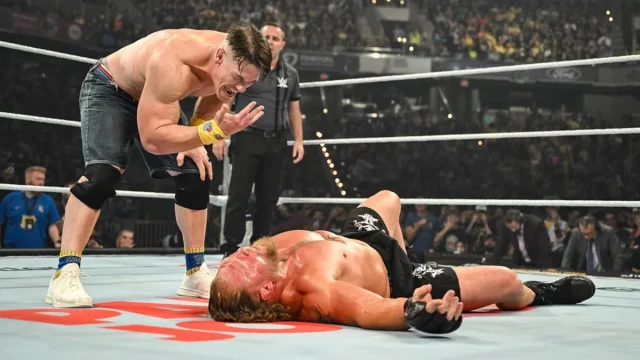
In a recent episode of the Impaulsive podcast, co-host Logan Paul shared his perspective on the slippery conditions caused by painted logos on WWE’s ring mats during matches. Paul discussed how these slick surfaces impacted performers, including LA Knight’s slip from the top rope during the Men’s Elimination Chamber match at the Elimination Chamber 2026 event.
Paul explained the difficulties faced by wrestlers as the night progresses, noting the accumulation of sweat and oils on the ropes and mats that significantly affect performance safety and execution. Citing his own experience in the ring, he detailed how the painted logos contributed to the slickness, making it challenging to maintain footing during high-speed maneuvers.
“Look, dude, what I’m about to say is the last thing I wanna do. I don’t wanna do this, because I despise L.A. Knight and everything he stands for, because let’s be honest, he doesn’t stand for anything. He stands for one affirmative word, ‘Yeah!’ We get it bro. Shut up. No!… He can’t even stand on the rope. I don’t wanna say this, but that particular botch that L.A. Knight had is not his fault, and I was in the ring. I was watching it go down live and I can feel the ropes before I do the jumps. They are so slippery and oily. You have no idea, especially when you’re the last match of the night, because it’s been used, right? And all these oily, sweaty wrestlers are just greasing these ropes up so by the time it’s 10 PM at night and you’re the last group to go, the ropes are soaking wet.
I also wanna say this though, while we’re on this topic, because again, I hate to defend L.A. Knight, but that botch wasn’t his fault, that rope was really slippery and guess what? I’m gonna say it: By the end of the night, the middle of that ring gets really slippery with them logos painted in there. I’ll just say it. I noticed. I can’t get running full speed. I gotta be really careful with my feet and my placement. Because the logos that they now paint in the middle of the ring — that I started! I started it with PRIME! We were the first in-ring, middle of the ring sponsor ever with the logo… It’s not us anymore! It’s not us anymore! And I know this was a thing because before we did that, we were going back and forth with WWE about whether or not it was even possible because the way they paint it, they wanted to actually stress test the mats and have people wrestle and see if it got oily and they determined that the type of paint they used was okay and that it wasn’t gonna be slippery. But then they started using color paint as well. I don’t know what they’re using now, but I’m telling you, it’s slippery.”
Paul’s remarks shed light on the ongoing challenges performers face in maintaining safety and delivering peak performances amid evolving production decisions. His insight draws attention to the physical conditions inside the ring, which can create unpredictable hazards, especially during high-profile events like the Elimination Chamber.
Joe Hendry Shares Valuable Insights Gained from Wrestling Legends CM Punk and John Cena
WWE NXT Champion Joe Hendry recently appeared on Sports Illustrated’s The Takedown to discuss the lessons he has absorbed from top stars CM Punk and John Cena and how those teachings have influenced his current championship run. Hendry reflected on the immense responsibility that comes with holding a title and the multifaceted role a champion plays beyond winning matches.
He described the importance of understanding the business’s broader aspects, such as ticket sales, television ratings, and locker room morale, all of which he actively monitors to contribute to WWE’s growth. Hendry emphasized that pressure is an inherent part of being champion but viewed it as a privilege, inspired by the professionalism demonstrated by Punk and Cena.
“It’s a huge responsibility. Being the champion is a rare privilege. And when you are the champion, there is now pressure on your shoulder to try and help elevate the ticket sales. You need to be aware of ratings. You need to be aware of locker room morale. You need to try and lead by example. There’s a lot of pressure. But like I said, I’ve spent a lot of time at the Performance Center. I’m really, really enjoying the training, and I feel like we’ve got a real team environment down there. We’re divided into different groups, and I feel like my group is just — we’re so motivated, the roster is hungry, and it’s an exciting time. So to be the one that gets to wear this championship and spearhead the brand right now, it’s a huge honor and it’s a responsibility that I take very seriously. Every championship title reign has a story, and I want the story to be that I was able to elevate the championship and help elevate the brand…
Anytime I get to a live event, my first question is to ask, ‘Where are we at with the draw? Where were we last time?’ And I’ve learned that from, CM Punk does that, John Cena did that, all the top talents did that. So I’ve tried to learn as much as I can from these guys. I’ve been fortunate enough to spend time with these guys and learn from them. And that is one thing I’ve noticed, is that they’re very hands-on with the stats and knowing what they are. And, yes, it’s pressure, but in this game pressure is a privilege.”
Hendry highlighted the focused environment at WWE’s Performance Center, where he trains alongside motivated peers eager to make their mark. His commitment to elevating the NXT brand reflects his respect for the championship and the willingness to learn from WWE’s established stars like John Cena and CM Punk, both known for their unwavering dedication to the craft and business.
Insights Into WWE’s Handling of Royce Keys’ Initial Transition
Former AEW star Powerhouse Hobbs, now performing under the name Royce Keys in WWE, made his official debut at WWE’s Royal Rumble 2026 event this past January. Since then, Keys has remained off televised WWE programming, as the company focuses on acclimating him to its production processes and overall environment. This adjustment period is reportedly standard for the vast majority of newly signed talent.
According to PWInsider’s Mike Johnson, a source familiar with the situation explained that Keys’ absence from TV is not indicative of any backstage troubles but is instead part of a structured approach to prepare him for a sustainable career within WWE. The source noted that nearly all new signees undergo a similar detox phase, which involves getting accustomed to WWE’s unique style of production for shows and events.
Keys’ gradual integration suggests WWE’s careful approach to nurturing and developing talent, ensuring performers are ready not just in-ring but also behind the scenes to meet the demands of the global sports entertainment company.
The Continued Impact of John Cena’s Mentorship on WWE Talent
Joe Hendry’s reflections on John Cena’s influence exemplify the lasting effect that veteran superstars have on wrestlers rising through WWE’s ranks. Cena’s lesson on paying close attention to business metrics, such as ticket sales and television ratings, highlights how wrestling is not only about athletic performance but also the broader success of the brand.
By applying these lessons, Hendry demonstrates the shift in mindset required to carry a championship beyond the physical aspect and into leadership, marketing, and team motivation. This comprehensive approach to being a champion helps elevate WWE as a whole, which is essential during periods of intense competition and fan scrutiny.
The ongoing focus on preparation and professionalism set by figures like John Cena underscores the importance of mentorship within WWE, guiding newer talents like Hendry toward long-term success both inside and outside the ring.
The Broader Significance of WWE’s Challenges and Developments
Logan Paul’s criticism of the slippery ring mats raises important safety concerns for WWE’s production team as they balance sponsorship visibility with performance conditions. This candid feedback from a performer deeply involved in the sport may prompt WWE to reevaluate their use of painted logos to maintain wrestler safety and match quality.
Meanwhile, Joe Hendry’s championship journey fueled by lessons learned from Cena and Punk signals WWE’s ongoing investment in developing future leaders. His approach to balancing in-ring success with business acumen highlights the evolving demands on WWE superstars.
Royce Keys’ behind-the-scenes adaptation period speaks to the company’s methodical talent development strategy, emphasizing readiness before frequent television appearances. These combined elements reflect WWE’s ongoing challenges and strategies as they continue to maintain their position in the competitive sports entertainment landscape.

