
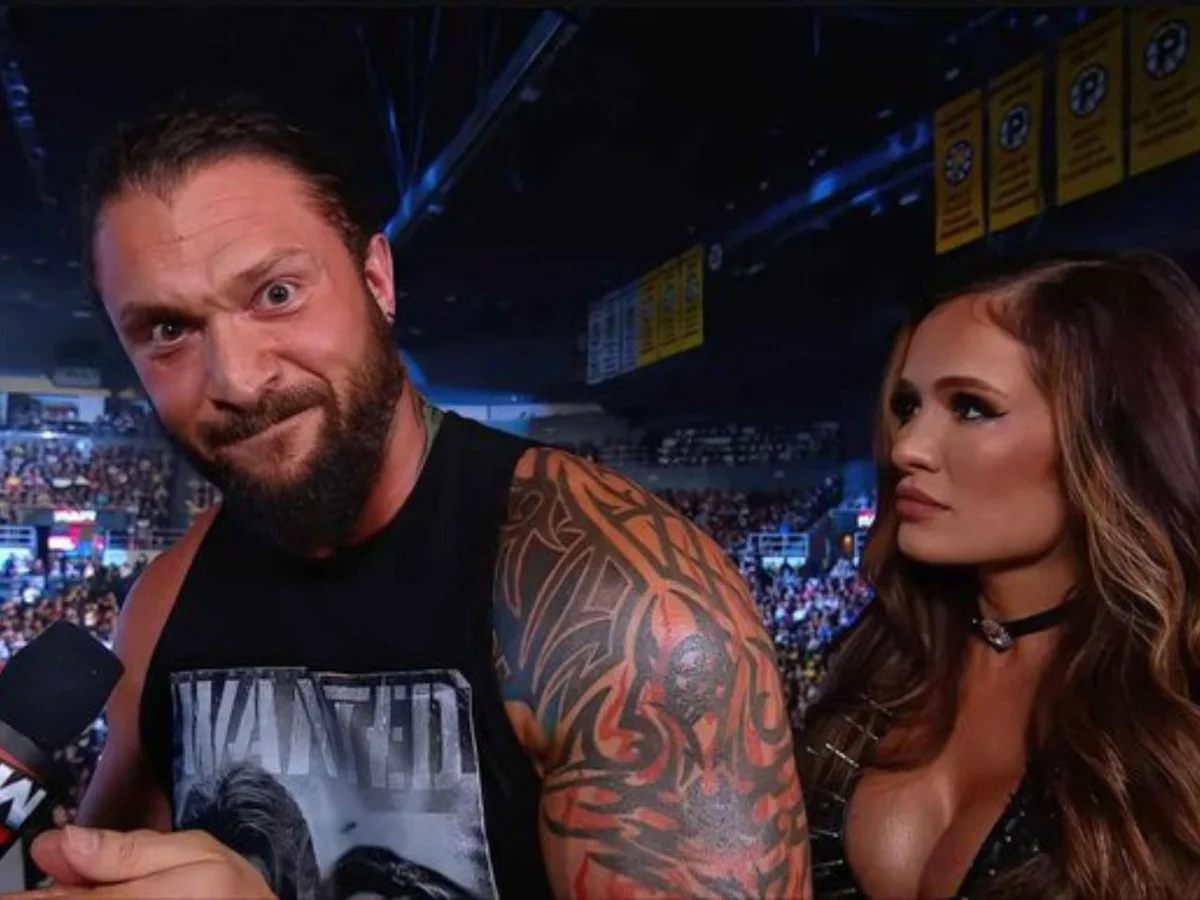
Karrion Kross and Scarlett have officially parted ways with WWE, with Kross revealing his frustration over contract negotiations that ended in disappointment. The wrestling veteran who commented on this situation pointed to WWE’s fanbase as a key factor in Kross’ departure, suggesting that the lack of support from fans contributed significantly to the star being released.
Kross reportedly became disillusioned after WWE pulled their contract offer following his questions about the proposed salary. This fallout has prompted debates about whether the responsibility for his exit lies solely with WWE or if fans also played a critical role in this development.
On the podcast Story Time With Dutch Mantell, the wrestling veteran expressed his opinion that WWE invested time and effort in building Kross’ character but failed due to insufficient fan enthusiasm. He explicitly shifted the blame toward the audience for not embracing Kross as hoped, implicating them in the star’s forced exit.
Look at what they’ve done. That’s a lot of work just to have no dollars attached to the end of it. What would they get out of this? Nothing. I think they’ve got other things they can spend their time on other than worrying about how we’re going to get Karrion Kross over. After four years, you would say it’s a failed experiment.But they tried several times, did they or did they not? They tried to do something with him, and it just wasn’t there. I blame the fans. Hey, fans, I’m blaming you. You’re the reason that he’s out of a job, and they sent him home.
—Wrestling Veteran
Other Significant WWE Contracts Coming Due
Karrion Kross and Scarlett are not the only talents reportedly exiting WWE, as several other contracts are nearing their expiration. Among these are former WWE Champion The Miz and Dragon Lee, whose deals are expected to conclude by year’s end. These developments add uncertainty about the roster’s future composition.
Beyond wrestlers, WWE president Nick Khan’s contract is set to expire in 2025, raising questions about leadership continuity and the company’s direction moving forward. This broader context suggests WWE could be entering a period of transition beyond just individual talent departures.
Recent Wrestling Headlines Highlight Wider Industry Unrest
In parallel, WWE has faced criticism of some of its current performers, with a RAW star publicly condemned by a veteran figure for poor performance. Meanwhile, AEW has partnered with NJPW to present a highly anticipated steel cage match at the Forbidden Door event, spotlighting the ongoing competition among wrestling promotions.
Off-screen stories continue to surface as well, including Jimmy Uso sharing an embarrassing first date tale about his wife Naomi. Other narratives include rumors about a WWE star’s extended absence potentially linked to pregnancy, and a top WWE star issuing a controversial warning to John Cena as his career winds down.
Future Matchups and Leadership Moves Under Speculation
Looking ahead, Roman Reigns is scheduled for a high-profile match at Clash in Paris, although his opponent has yet to be confirmed, fueling speculation among fans and analysts alike. Meanwhile, The Rock’s ambitions within WWE appear to be growing, hinting at potential major career changes.
On the management side, Raw General Manager Adam Pearce has recently criticized one WWE talent sharply, voicing frustration that reflects wider fan sentiments. These developments underscore ongoing tensions within WWE’s ranks and hint at possible shifts in how the company addresses internal and external feedback.
Impact of Karrion Kross’ Exit on WWE’s Future
The departure of Karrion Kross and Scarlett highlights larger challenges facing WWE, notably how fan engagement directly affects talent retention and contract negotiations. The veteran’s comments underscore the pressure WWE faces to balance creative investments with audience reception. As other contract renewals loom, WWE’s leadership will need to navigate a complex period of roster stability and business strategy.
Kross’ exit serves as a case study in the delicate relationship between performers, management, and fans. Going forward, how WWE manages these dynamics could influence the company’s ability to maintain top talent amid a competitive wrestling landscape.

