
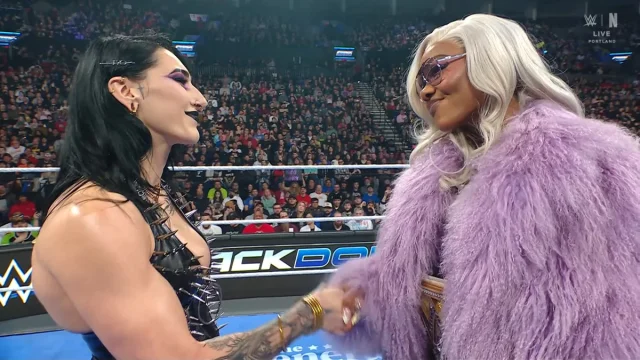
On the March 6 episode of WWE SmackDown, an unusual promo exchange caught fans’ attention. With WrestleMania 42 approaching, WWE Women’s Champion Jade Cargill and Elimination Chamber winner Rhea Ripley faced off in the ring, trash-talking one another about the size of their muscles. This storyline drew focus not just to their upcoming match, but also to a notable change in Ripley’s physique. The once extremely muscular Ripley now appears more toned than before, sparking questions among fans about the reasons behind this transformation. The topic of Rhea Ripley muscle loss soon became widely discussed.
Rhea Ripley’s Evolution From Early Career to WWE Main Eventer
Rhea Ripley’s journey in WWE reflects a striking transformation, both in appearance and wrestling style. Originally debuting at the Mae Young Classic in 2017, Ripley looked very different from today. Back then, she sported long blonde hair, had no tattoos, and wore minimal makeup—traits common among many female wrestlers at that time. It would be tough to recognize her as the same person if you viewed her early appearance today.
As Ripley’s career progressed, so did her image. She cut her hair short and darkened it, added darker makeup with strong black eyeliner and lipstick, and began wearing black ring gear. Simultaneously, tattoos started to adorn her body, appearing seemingly every week. Beyond the aesthetics, Ripley dramatically increased her muscle mass through intense workouts, making her physique comparable to that of top male wrestlers.
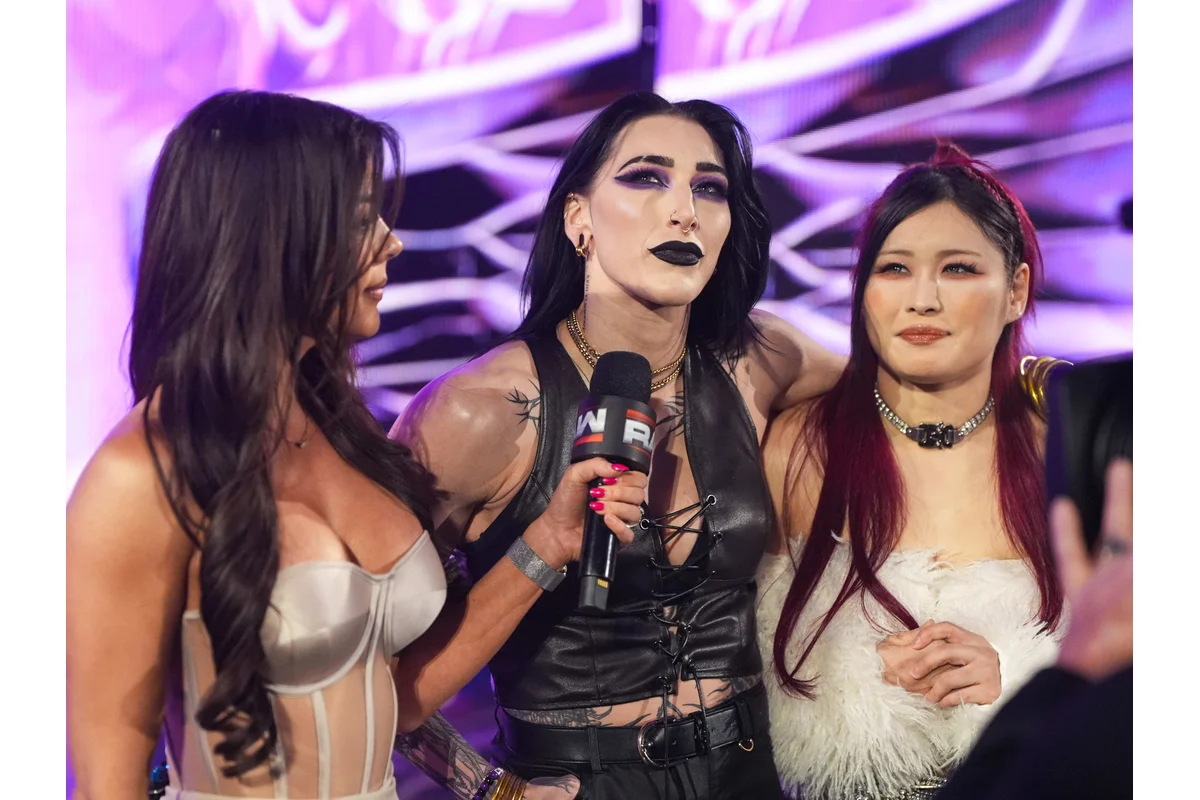
Her powerful build even earned her comparisons to WWE legend Chyna, and fans hoped she might compete in intergender matches, particularly during her feud with Dominik Mysterio. Those hopes were never realized, but Ripley’s presence was undeniably dominant in the ring. Her physicality and skill made her a top contender and one of the most respected performers in WWE’s Women’s Division.
Observing the Differences in Ripley’s Muscle Definition Over Time
Even as Rhea Ripley thrives within WWE, particularly after teaming with Iyo Sky to win tag team titles and claiming the Elimination Chamber victory, fans have noticed a visible shift in her physique. Instead of the bulky muscle mass that once defined her, Ripley now shows a leaner, more streamlined form. Online forums such as Reddit, Twitter/X, and Threads have seen vigorous discussion of this change, focusing more on her altered appearance rather than her wrestling ability.
Post by @wrasslin_critic
View on Threads
This has sparked uncomfortable conversation because female athletes often face harsh scrutiny regarding their bodies. If they gain or lose weight, fans can be quick to criticize. In Ripley’s case, the criticism comes not from gains but notable muscle loss. Yet, despite these changes, Ripley remains in excellent shape and performs at an elite level. The visible change in her body, however, has an understandable explanation rooted in her health struggles.
Longstanding Injury Issues Have Impacted Ripley’s Physical Condition
Achieving Ripley’s former muscular physique required intense training routines and a demanding diet, all while managing the physical toll of wrestling. Over the years, she has endured several serious injuries, including a separated shoulder and a broken orbital bone. Most notably, she has struggled with a chronic back injury dating back to her time in NXT, which has worsened over time and impacted her daily functioning and in-ring performance.
In a July 2025 interview with Chris Van Vliet, Ripley opened up about the severity of her back pain and how it has limited her ability to train and compete:
“Normally, my lower back (is what hurts when I get up in the morning), especially lately. I don’t know what’s been going on. I think it actually started from the match I had with Raquel (Rodriguez) in NXT where she gave me the back body drop onto the announcement table but we undershot it and I hit the very edge of the table, like right on my lower back and after that, my lower back was, like, just never the same. But, I mean, I do whatever I can to try and make it better. I have our masseuse, Matthew, come over and he works on it, he helps stretch me out and puts my hips back in line pretty much and just fixes all of that and it’s like, thank goodness I do that and thank God for him that he comes over to help because sometimes it gets really bad. I didn’t think that I would be able to wrestle at WrestleMania 41.”? Rhea Ripley, WWE Wrestler
“41, I didn’t think I was gonna be able to compete because my back was so bad leading up to it and the two nights beforehand, I got Matthew to come to my room and he worked on me the night before Hall of Fame and the night of Hall of Fame. I was like, ‘I need you to make sure I can walk tomorrow,’ and he worked on me those two nights and it loosened completely just in time for the match and then after the match, it was okay and then slowly, because I’ve been wrestling more, it slowly tightens up but that’s because I just don’t stretch on my own so that’s my fault as well. But, I need to be better. Yeah, it gets really bad. I don’t know if it’s a sciatic thing, or whatnot or just my body in itself, the shape of my body and how I’m put together. I don’t know what’s going on, but it’s something. But it does go down and it definitely revs up sometimes and sometimes it’s just bearable…”? Rhea Ripley, WWE Wrestler
The injury sustained during the back body drop from Raquel Rodriguez onto the announcement table appears to be a turning point, after which Rhea’s back problems intensified. The ongoing pain from this injury necessitates careful management, including regular treatment from a masseuse named Matthew, who helps alleviate discomfort and maintain mobility. Ripley also acknowledges that neglecting stretches contributes to her back tightening up, reducing her options for recovery.
How Chronic Pain Has Led to a Change in Muscle Mass
The connection between Ripley’s injury and her muscle loss is clear when considering the physical demands of her former training regimen. Maintaining large muscle mass requires lifting heavy weights and rigorous workouts, all of which can exacerbate back pain. To reduce discomfort and improve her ability to perform in the ring, Ripley has had to adjust her body composition and training intensity.
Giving up some of her muscle mass appears to be a necessary compromise for Ripley’s health and longevity in wrestling. By lightening her frame, she may experience less pain and greater ease of movement, which could help prolong her career. Fans are hopeful this adaptation lets Ripley continue competing at the highest level without worsening her injury.
Implications for Ripley’s Career and WWE’s Women’s Division
Rhea Ripley’s transformation, though unexpected for some, highlights the physically grueling nature of professional wrestling and the sacrifices athletes make. Ripley remains one of WWE’s brightest stars and a key figure in the Women’s Division, but her changing physique reminds viewers that behind the spectacle, there are real health battles being fought. Ripley’s willingness to openly discuss her back injury and its impact on her body sheds light on the pressures female wrestlers face in maintaining certain appearances while managing pain.
Moving forward, WWE fans will likely continue to watch Ripley’s journey closely, supporting her resilience. She exemplifies the balance between battling injuries and delivering top-tier performances. Ripley’s story may also encourage greater understanding of the physical toll wrestling takes, especially on women athletes who face unique scrutiny.
Anyone else find it weird how much muscle mass rhea has lost in the past 2 years?
byu/Bejaminmaston12 inSantiZapVideos

