
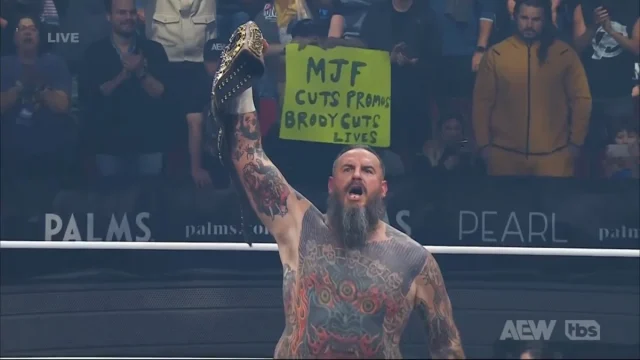
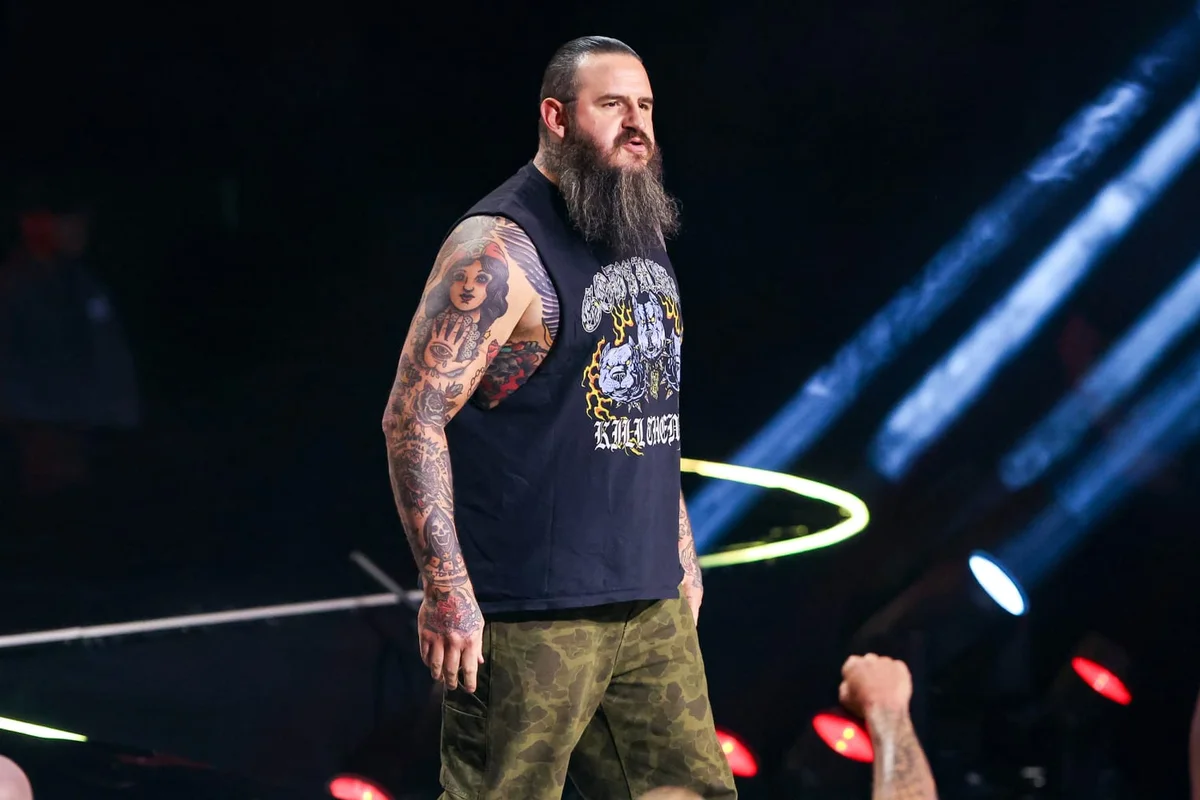
Brody King is being positioned for a main event championship opportunity, with many fans and analysts recognizing his in-ring ability, persona, and fan connection. However, current AEW World Champion MJF is still seen as a rising star with a strong build-up, and industry insiders express skepticism about him losing the title too soon. This raises a question: if Brody King were to claim the championship at an upcoming event like Grand Slam, would MJF be labeled a transitional champion given the brief nature of his reign and limited title defenses?
The Definition and Purpose of a Transitional Champion
There is no formal, universally accepted numerical threshold defining a transitional champion, but the concept typically involves a short-lived reign where the titleholder serves primarily as a passage point between two other key wrestlers. The important factor is intent—transitional champions hold titles briefly not for their own momentum, but to allow the championship to move between two wrestlers who, for storyline or promotional reasons, cannot face each other directly.
One seminal example is the Iron Sheik, who won the WWE World Heavyweight Championship to facilitate the title transfer from Bob Backlund to Hulk Hogan. Backlund, who had rejected a heel turn, would not feud convincingly face-to-face with Hogan as a babyface versus babyface. The Iron Sheik’s title run, despite featuring many defenses, was considered a stepping stone rather than an independent push. His reign was more about enabling a bigger storyline.
In more recent history, the second WWE Title run of Mike “The Miz” serves as another illustration. Miz briefly held the title to transfer it from Drew McIntyre to Bobby Lashley, helping preserve the dramatic impact of a McIntyre-Lashley feud. Miz’s reign had no long-term promotional intent and was purely transitional.
Why MJF’s Reign Likely Won’t Be Classified as Transitional
Unlike the examples cited, MJF’s championship tenure is portrayed as a deliberate star-building push rather than a placeholder reign. Even if he loses the title to Brody King shortly, MJF is being positioned as a prominent figure in AEW, not merely as an intermediary to move the belt between other competitors. His long-term narrative and individual prominence suggest that a brief reign would not reduce him to transitional status.
Profiles and Career Finales of the 1989 Royal Rumble Participants
Matt B recently inquired about the career endpoints of the participants from the 1989 Royal Rumble, a landmark event as the first Royal Rumble broadcast on pay-per-view. Their final WWF/WWE matches and overall wrestling retirements reveal an intriguing picture of longevity and legacy in professional wrestling. Here is a detailed overview of their concluding bouts and dates, listed in the order of their elimination from the Rumble and using the date of their last career match as a reference point.
1. Big John Studd was both the winner of the 1989 Royal Rumble and the first eliminated in this retrospective. His final WWF match occurred on June 2, 1989, in West Palm Beach, Florida, teaming with Jim Duggan to defeat Haku and Andre the Giant. After departing WWF, Studd wrestled once more on February 9, 1990, in Greenwood, South Carolina for the North American Wrestling Association, securing a victory over Jack Lord.
2. Andre the Giant appeared in his last WWF match on May 11, 1991, participating in a house show battle royale in Detroit’s Joe Louis Arena. His final professional match took place on December 4, 1992, at the Budokan for All Japan Pro Wrestling, teaming alongside Giant Baba and Rusher Kimura for a six-man tag match win.
3. Mighty Hercules lost his final WWF match to The Berzerker on February 24, 1992, in Worcester, Massachusetts. His wrestling career extended until November 7, 1997, winning his last match in Gainesville, Florida against Jerry Flynn for NWA Florida.
4. Rick Martel last appeared in the WWF at the 1995 Royal Rumble, eliminated by Headshrinker Sionne. Martel’s final professional match was on March 20, 1999, in Kailua, Hawaii for the Hawaiian Islands Wrestling Federation, defeating the Metal Maniac—a likely opportunity grabbed as part of a casual return visit.
5. Bad News Brown exited WWF in 1990 after a disqualification loss at SummerSlam. His last professional bout took place on May 10, 1999, in Regina, Saskatchewan, defeating The Jackyl for the International Wrestling Alliance.
6. Arn Anderson had his final WWF match at the 1989 Survivor Series on November 23 as part of the Heenan Family team. Anderson’s final match was recorded on May 16, 2000, a WCW Thunder taping in a tag victory with Ric Flair.
7. Butch Bushwhacker last wrestled for WWF on September 15, 1996, winning a tag match in Nashville, Tennessee. His final career match was on September 8, 2001, ending in a tag title loss at an indie event in Farmville, Virginia.
8. Mr. Perfect returned briefly to WWF in 2002 with his last match against Matt Hardy. His career ended with a victory over David Flair on January 8, 2003, in TNA. He died the following month.
9. Big Boss Man wrestled his last WWE match on May 20, 2002, losing to Tommy Dreamer. His final appearance was in Tokyo on August 31, 2004, before passing away the next month.
10. Randy Savage had his last WWF bout in 1994 in Germany teaming with Bret Hart. His final professional match took place at TNA’s 2004 Turning Point event, teaming with Jeff Hardy and AJ Styles for a victory.
11. Terry Taylor concluded his WWF in-ring career in 1999 but wrestled occasionally afterward, with his final match in 2006.
12. One Man Gang (formerly African Dream Akeem) wrestled his last WWF match in 1998 and continued sporadically until a 2009 appearance for the International Wrestling Cartel.
13. Hulk Hogan’s last WWF match was at the 2006 SummerSlam, with his final career match taking place in 2012 for TNA in England.
14. Ron Bass ended his WWF tenure in 1989 and retired after a 2013 match in Germany.
15. Ron Garvin last toured WWF in 1990, wrestling for Bruiser Wrestling Federation as late as 2014.
16. Brutus “The Barber” Beefcake had his final WWF bout in 1993 and continued occasional matches through 2015.
17. Barry Darsow last appeared in WWE in 2007 and wrestled his final match in 2017 in North Carolina.
18. Bill “Ax” Eadie of Demolition had his last WWE match in 1990 but remained active in independent wrestling until 2017.
19. Marty Jannetty had a sporadic WWE career with his last match in 2009 and retired officially in 2018 after an eight-man Survivor Series style match.
20. Jake “The Snake” Roberts wrestled his last WWE match in 1997 and continued with independent bouts as recently as 2018.
21. Shawn Michaels is unique in retiring immediately after his final WWE match in 2018 at Crown Jewel, where he teamed with Triple H.
22. Ted DiBiase won the final WWE match of his career in a 2007 battle royale, wrapping up his in-ring work in 2019.
23. Honky Tonk Man competed in WWE last at the 2008 Cyber Sunday event, with independent matches continuing through 2019.
24. Greg Valentine had a late WWF run in 2005, finishing his career in 2019 at an East Coast Pro Wrestling event.
25. Tully Blanchard left WWF in 1989 but remained active until wrestling a six-man tag match for AEW in 2021.
26. Tito Santana ended his WWF appearances in 1993 and competed as late as 2022 in Australia.
27. Koko Ware wrestled WWE matches into 2025, including a battle royale later that same year, demonstrating surprising longevity.
28. The Warlord outlasts Koko by weeks, wrestling as recently as October 2025 at the age of 61 for Battleground Championship Wrestling.
29. Bushwhacker Luke competed in his last match in late 2025, marking an active career at age 79 with multiple matches that year.
30. The Barbarian (Sionne) wrestled his last WWF match in 1995 and had a recent match in December 2025, cementing his place as the “ultimate winner” of the 1989 Royal Rumble by longevity standards.
Implications and the Ongoing Discussion
The classification of championship reigns, especially regarding transitional status, influences how wrestlers are perceived within the industry and among fans. For MJF, the current narrative and promotional trajectory suggest that even a short reign would not diminish his star potential or legacy. Brody King’s ascension to titleholder would mark an important milestone in his career, signaling AEW’s faith in his abilities.
Meanwhile, the detailed examination into the careers of 1989 Royal Rumble participants offers a somber reflection on wrestling’s ever-changing landscape, highlighting performers’ longevity and commitment to the craft, extending decades beyond their prime televised moments. The fact that some competitors remain active into 2025 challenges assumptions about wrestling retirements and underlines the physical and cultural endurance required in professional wrestling.
As this conversation continues within wrestling communities, broader discussions around title lineages, star-making decisions, and historical legacies remain pivotal in shaping the sport’s future storytelling and fan engagement.

