
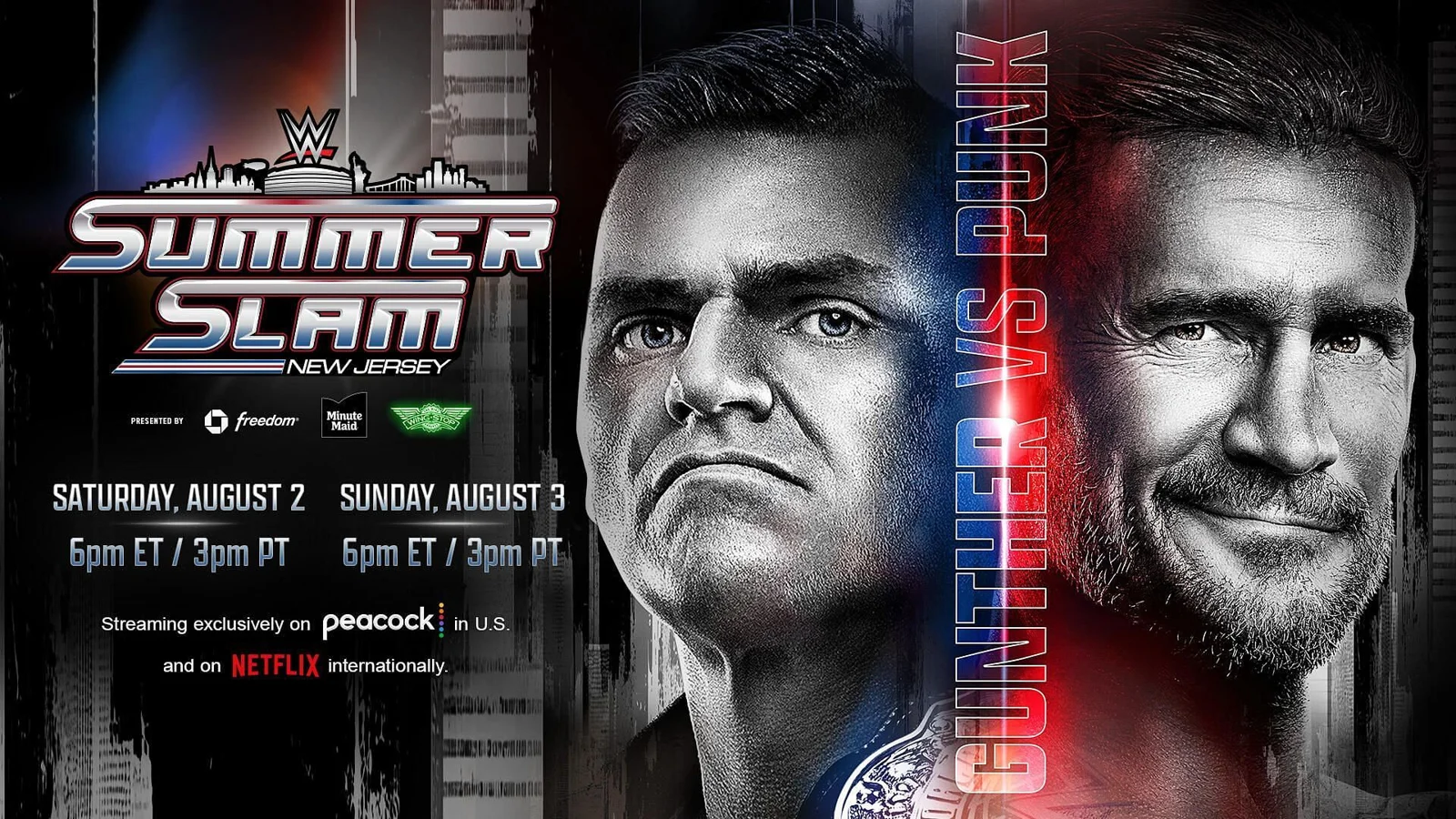
The wrestling world is heating up on the road to Summerslam with several high-profile feuds and surprising developments shaping the landscape. From the intense rivalry between Randy Orton and Drew McIntyre, to Jade Cargill’s breakthrough as a top babyface, and a stunning cash-in by Naomi that has shaken the women’s division, these storylines are setting the stage for what promises to be one of <a href="https://cynicaltimes.org/category/wrestling-news/wwe/”>WWE’s most captivating summers yet.
Goldberg’s Farewell and WWE’s Content Saturation Challenge
Recently, wrestling legend Goldberg officially retired after a memorable match against Gunther at Saturday Night’s Main Event, marking one of his longest and most commendable in-ring performances. Despite some limitations in his wrestling skills, Goldberg’s stature as one of his era’s biggest stars was celebrated as he went out on a high note, capping a well-crafted program with one of WWE’s current top performers. His retirement signifies the end of an era and left fans reflecting on his contributions to the sport.
Meanwhile, WWE faces a unique challenge with its expanding content slate. Following a packed weekend featuring Great American Bash, Saturday Night’s Main Event, and Evolution II, there is a growing sense that WWE may have reached a saturation point with its programming. While each show had its own style and quality, the sheer volume risks overwhelming even the most devoted fans. The company must carefully balance maintaining viewer interest without diluting the storytelling, a difficult feat amidst monthly pay-per-views, new specials, and expanding weekly shows like Evolve.
The Rising Conflict: Orton, McIntyre, Jelly Roll, and Logan Paul
Drew McIntyre’s return from injury sparked renewed tension when he interrupted a confrontation between Randy Orton and Cody Rhodes, only to receive an RKO from Orton. A surprise guest appearance from singer Jelly Roll soon added an unusual yet engaging layer to the feud. When Logan Paul, portraying his usual antagonistic role, crashed Jelly Roll’s performance, Orton sided with Jelly Roll against Paul. This alliance was short-lived as McIntyre attacked Orton, allowing Paul to inflict damage on McIntyre until Jelly Roll intervened.
At Saturday Night’s Main Event, Orton and McIntyre faced off with Jelly Roll and Logan Paul at ringside. Jelly Roll’s interference helped Orton secure the victory, deepening the multi-faceted rivalry. Subsequently, Jelly Roll teamed with Orton to challenge McIntyre and Paul in a tag match scheduled for Summerslam.
This feud has developed into an engaging storyline, with Jelly Roll emerging as a surprisingly effective babyface given his authentic background and relatable persona. His dynamic with Logan Paul, who embodies an overconfident heel, feeds well into fan response and elevates the storyline’s intensity. The chemistry among all four men has been notable, with Orton’s grounded style complementing Jelly Roll perfectly, reminiscent of the dynamic energy that once fueled RK-Bro.
Moreover, the feud benefits from well-timed comedy and media appearances, including Logan Paul’s chokeslam on a late-night talk show, adding a retro Attitude Era flavor. While their recent in-ring match showed some pacing issues typical of Orton’s style, it laid important groundwork for their upcoming Summerslam bout.
Grade: A-
Jade Cargill’s Emergence Through Grit and Determination
Jade Cargill’s journey this year has been marked by resilience and newfound momentum. Having previously held the WWE Women’s Tag Team Championship with Bianca Belair, Cargill’s momentum was stalled after an attack by Naomi put her on the sidelines. The ongoing grudge with Naomi escalated at Wrestlemania 41 and persisted as Naomi ascended to Ms. Money In The Bank later in the year.
At Night of Champions, Cargill defeated Asuka to claim the Queen of the Ring crown and secured a title shot for WWE Women’s Champion Tiffany Stratton at Summerslam. The rivalry with Naomi intensified further when they clashed in a brutal No Holds Barred match at Evolution II, with Bianca Belair returning as guest referee. Their violent encounter, featuring extreme spots well within WWE’s PG boundaries, ended with Cargill victorious.
This feud stands out within the women’s division, delivering a palpable blood feud driven by a fierce desire for domination. Both Naomi’s evolution into a main event heel and Cargill’s transformation into a quiet but powerful babyface have elevated the storyline. Cargill’s shift towards a minimalist promo style and more aggressive in-ring approach helped her break free from earlier inconsistencies, positioning her as a legitimate challenger.
The integration of Belair into the narrative as a referee served as a nostalgic callback to older programming methods, enhancing anticipation for the PPV. However, Belair’s actual presence in the match felt underutilized, missing an opportunity to deepen the storyline given her history with both women. Despite this, the feud’s resolve firmly established Cargill’s star power ahead of Summerslam while keeping Naomi strongly relevant.
Grade: A
Women’s Title Scene: Tiffany Stratton vs. Trish Stratus
WWE Women’s Champion Tiffany Stratton’s recent storyline included a notable confrontation with returning legend Trish Stratus. Although their paths crossed previously in tag matches, the decision to book a singles match at Evolution II promised a dream encounter. Following a respectful build-up highlighting the importance of an all-women’s PPV, the match saw Stratton retain her title in a contest that, while solid, lacked distinctive pacing or memorable moments.
Stratus’ return adds legitimacy and star power to the division, and her role as an end boss figure provides a strong foil for younger stars like Stratton. However, WWE’s portrayal of Stratton conflicts between encouraging cheers and emphasizing her brattiness, resembling an L.A. Knight-style character who draws popularity despite heelish traits. This ambivalence has left her character development muddled, and with a marquee match against Jade Cargill looming at Summerslam, WWE faces the challenge of crafting a more concrete narrative for Stratton to avoid a lukewarm reception.
Grade: C-
Tag Division Power Struggle: The Wyatt Sicks’ Dominance
After a hiatus, the Wyatt Sicks made a dramatic return by overpowering all the leading teams in the Smackdown Tag Division. This display of dominance positioned them firmly as the top faction in the midcard, culminating in their capture of the tag team titles after a hard-fought victory against The Street Profits, who had declared themselves rulers of the division.
This storyline revitalizes the tag team scene by pitting multiple babyface teams against a dominant heel faction, providing clear motivation for ongoing conflict. Although the Wyatt Sicks’ motives appear less defined—shifting from targeted aggression to general chaos—their title reign creates a compelling reason for opponents to rally. This dynamic sets a solid foundation for tag team storytelling, though the path to this point was somewhat awkward in execution.
Grade: B+
Promotion of Andrade and Rey Fenix as a Tag Team
In tandem with the tag division’s reshuffle, Andrade and Rey Fenix have formally joined forces after a decisive win over a rookie team, ending the newcomers’ undefeated streak. Positioned as babyfaces, their alliance offers fresh depth to the Smackdown midcard, especially as the focus on the U.S. Championship narrative wanes within the ongoing Bloodline civil war.
Despite being a straightforward setup that lacks a rich backstory, the pairing works logically given their previous shared enemies and complementary wrestling styles. Given limited screen time and the scarcity of a defined singles scene for both men, this makeshift team ensures their continued relevance within WWE’s competitive landscape.
Grade: B-
Aleister Black’s Quiet Transformation into a Heel
The R-Truth and Aleister Black rivalry developed from Truth’s angry, more violent persona following his return and release from WWE. While Truth seeks retribution mainly against John Cena, his aggressive behavior puts him at odds with Black. Damian Priest attempts to mediate, but Black’s frustration culminates in a heel turn after a contentious match where Truth used underhanded tactics to secure victory.
This subdued feud delivers nuanced storytelling, with R-Truth balancing a mix of rage, cunning, and dark comedy to remain compelling. Black’s restrained anger and gradual slide into villainy contrasts with WWE’s usual explosive confrontations, creating an uncomfortable but engaging atmosphere. The understated heel turn enhances Black’s character, moving him beyond the brooding underdog stereotype and setting the stage for intriguing future developments.
Grade: B+
The Bloodline’s Internal Rift and New Alliances
The Bloodline faction continued to evolve with Solo Sikoa’s introduction of J.C. Mateo, sparking tension with Jacob Fatu. Fatu’s betrayal of Sikoa at Money In The Bank and subsequent alliance with Jimmy Uso led to a faction split, with Sikoa rebranding his stable as the MFT Bloodline, bolstered by the return of Tala Tonga.
Concurrently, L.A. Knight’s appearance on Smackdown saw an uneasy truce with Fatu and Uso as they faced interference from Seth Rollins‘ allies. Sikoa challenged Jimmy Uso to a U.S. Title match at SNME, where the numbers advantage favored the heel faction.
While the storyline reintroduces fresh conflict and integrates past feuds logically, new members like Mateo and Tonga suffer from lack of distinct character development, feeling shoehorned into generic roles. However, the pairing of Bronson Reed and Breakker under Paul Heyman in the absence of Seth Rollins has injected renewed intrigue, suggesting compelling directions for upcoming programming.
Grade: B-
Charlotte Flair and Alexa Bliss Form a Tentative Alliance
Charlotte Flair’s frustration following Wrestlemania 41 manifested in multiple outbursts against the audience, prompting Alexa Bliss to offer an olive branch. Their partnership, announced for a four-way Women’s Tag Team Title match at Evolution II, evolved from reluctant allies to a surprisingly effective duo, showcasing notable chemistry despite losing to The Judgement Day.
This alliance focused more on collaborative success than the traditional odd-couple tension, with Bliss gaining momentum as a dominant player parallel to Flair’s sustained main-event status. While this strategy keeps Flair relevant beyond her usual singles competition, it refreshes both competitors’ narratives and presents the burgeoning team as legitimate contenders moving forward.
Grade: B+
Naomi’s Unexpected Cash-In and Title Victory
As Ms. Money In The Bank, Naomi’s storyline was expected to culminate in a title match against Tiffany Stratton at Summerslam, given their intertwined feuds and Cargill’s involvement. In an unforeseen twist, after losing to Cargill at Evolution II, Naomi bypassed this match and instead cashed in her contract during the Women’s World Championship encounter between Iyo Sky and Rhea Ripley.
Naomi’s successful cash-in and subsequent championship win marked a major turning point for the women’s division. Her development into a fiercely unhinged heel commands attention, with a fiery intensity that stands out amid the company’s roster. Unlike typical cash-in moments, this one was subtle enough to reward attentive viewers, enhancing its impact and lending Naomi an air of savvy and danger.
This moment introduces fresh rivalries for Naomi atop the women’s ranks, enriches the storytelling, and invigorates the division with a compelling new antagonist. It demonstrates WWE’s capacity to surprise and sustain excitement despite an often predictable environment.
Grade: A+
Our Reader’s Queries
Q. Is WrestleMania or SummerSlam bigger?
A. SummerSlam is a yearly wrestling show produced by WWE, the largest wrestling company in the world. It’s known as “The Biggest Party of the Summer.” This event is thought to be WWE’s second most important show, right after WrestleMania.

